Learning Experience/Unit
What Can the Matter Be?
Subject
Science (NYS P-12)
Grade Levels
Elementary, 2nd Grade
Assessment
Please click this link for my assessment.
Learning Context/ Introduction
This Science Grade 3 Learning Experience titled "What Can the Matter Be?" includes reading a passage on Solids, Liquids, and Gases and creating an individual brochure from a template to categorize the properties of matter.
Duration
Day 1: 30 minutes
Day 2: 30 minutes
Day 3: 30 minutes, with additional 45 minute guest presentation-Brochure creation may take some students longer than others. Additional time was given as needed.
Day 4: 30 minutes
Essential Question
How do I identify the states of matter?
Procedure
Day One:
- Watch the video from YouTube - Bill Nye the Science Guy: Phases of Matter (23 minutes)
- Have students take notes in their Science notebook while viewing.
- Work on vocabulary (see words in vocabulary section below) by using index cards and putting these together on rings.
Day Two:
- We will read the poem "The Three States of Matter" and together move the words on the airliner interactively.
- We will do the sort activity on the airliner interactively.
- We will read the book Solid, Liquid, and Gas in class.
- Teacher will freeze water in an ice cube container overnight.
Day Three:
- Teacher will take out the ice cube container and let it melt in class today.
- In class, we will read the three paragraphs entitled "What's the Matter?"
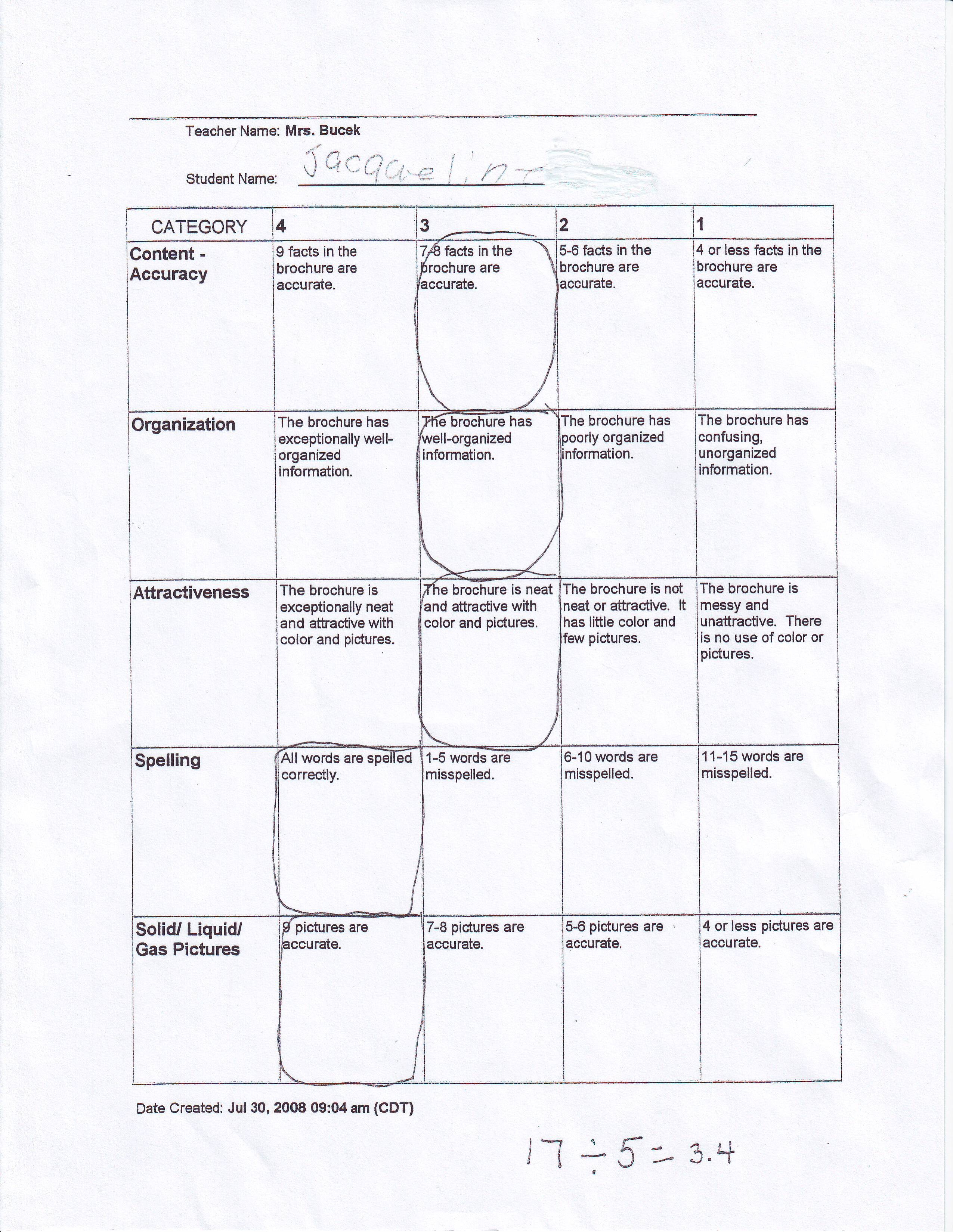
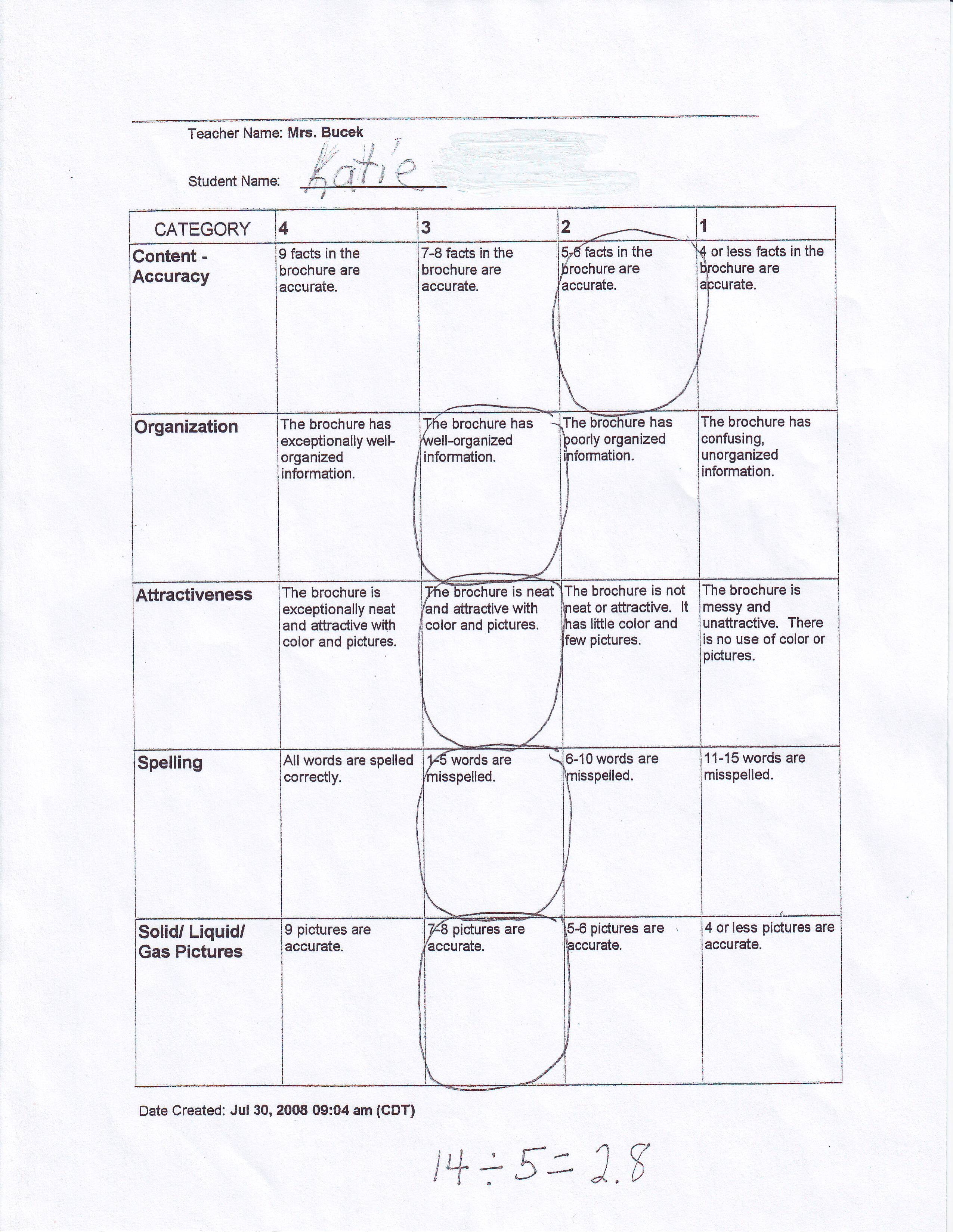
- The students will be shown the rubric. Students were shown examples of three local brochures. Students were shown a brochure from a previous year's student to model what they are expected to construct.
- In the computer lab, the students will be directed, step-by-step, through the how to edit brochure document. At least two teachers will be available in the room for the sixteen students. The children will complete the brochure. This brochure was done in Print Shop. See attached below.
- Teacher will boil water in an electric frying pan and hold plexiglass above it to reinforce the concept of gas.
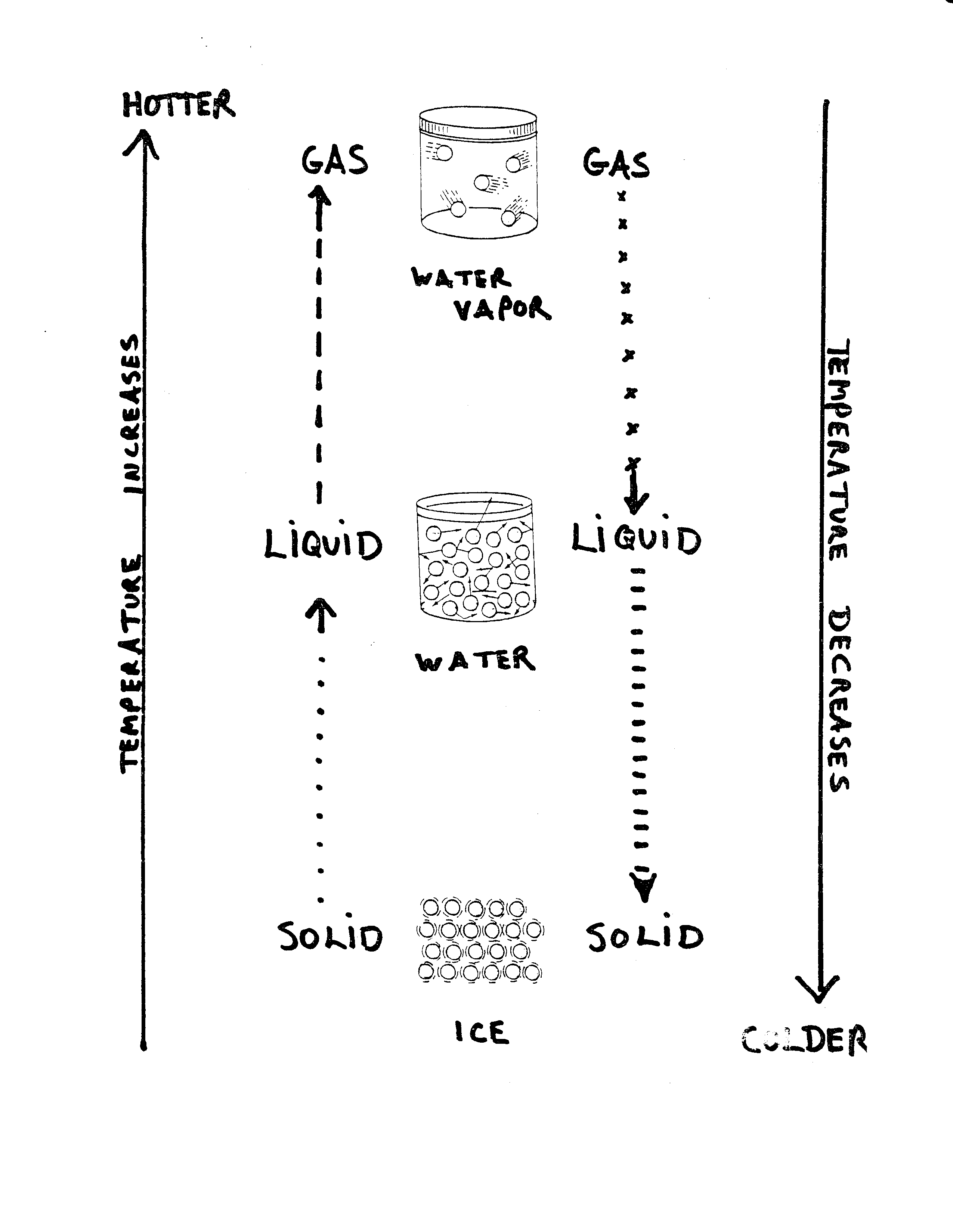
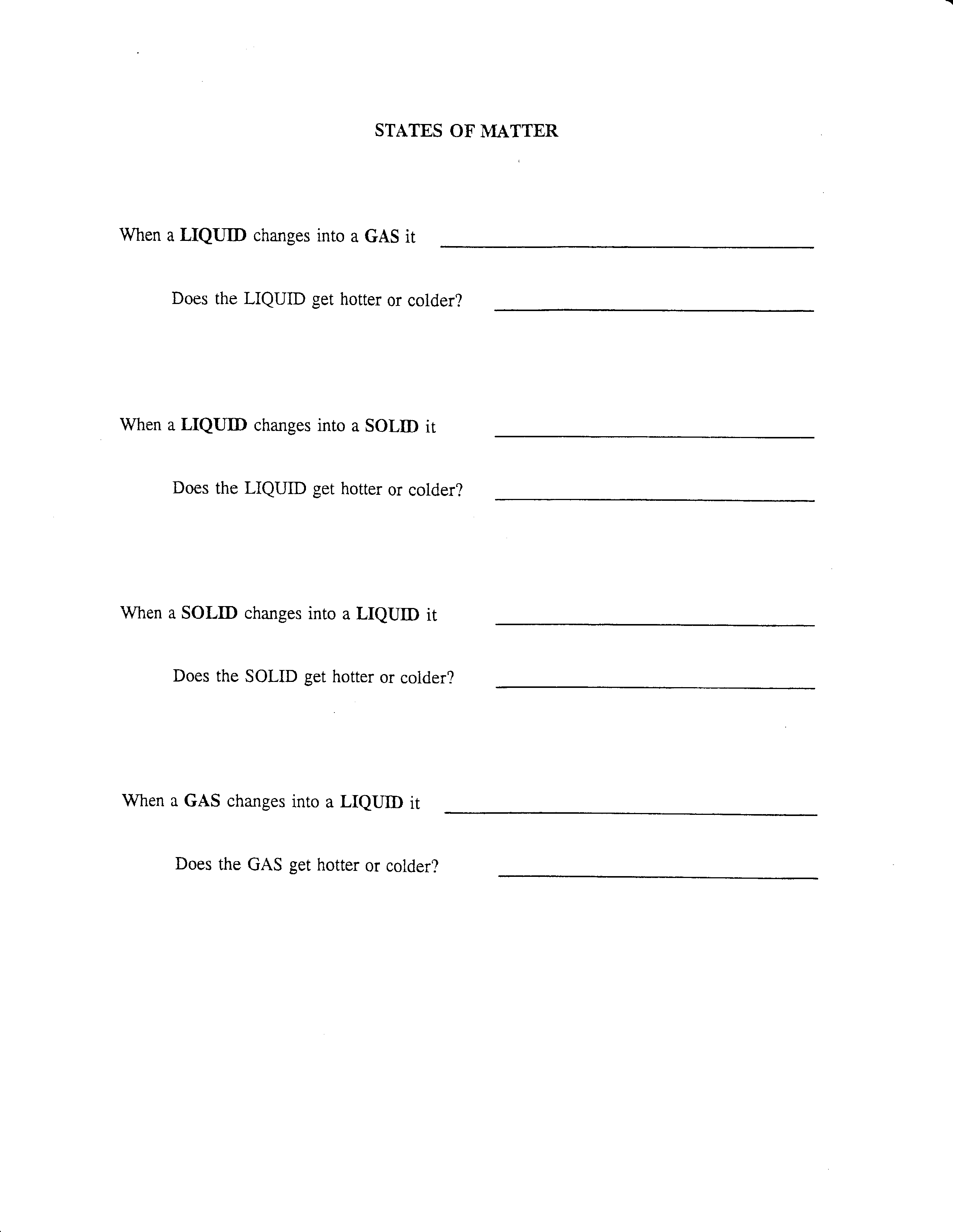
- Mr. Peter Pollock, a science teacher from Bassett Hospital, Cooperstown, gave a 45-minute lesson on solids, liquids, and gases in the classroom. The attached sheet, found below, was used during this lesson.
Day Four:
- The CPS (Classroom Performance System) questions were given once the learning experience was finished. They were used as a review and discussion tool. See attached below.
*** Additional time or days may be needed to complete this learning experience.
Reflections and Feedback
On Day Two, it was important to allow considerable time for children to read the poem to themselves before expecting them to move the words on the airliner interactively. The poem was at a perfect reading level and appropriate length. I noticed exceptional anticipation of this activity and focused individual involvement due to the nature of using the airliner interactively. The pictures on the sort activity were great which led to no confusion whatsoever. I noticed one low reader volunteering to move pictures on the sort activity. It was effective and well-planned to read the paragraphs, rubric, and become familiar with the brochure template and expectations in the computer lab before going there. All four days were valuable learning experiences.
Student Work
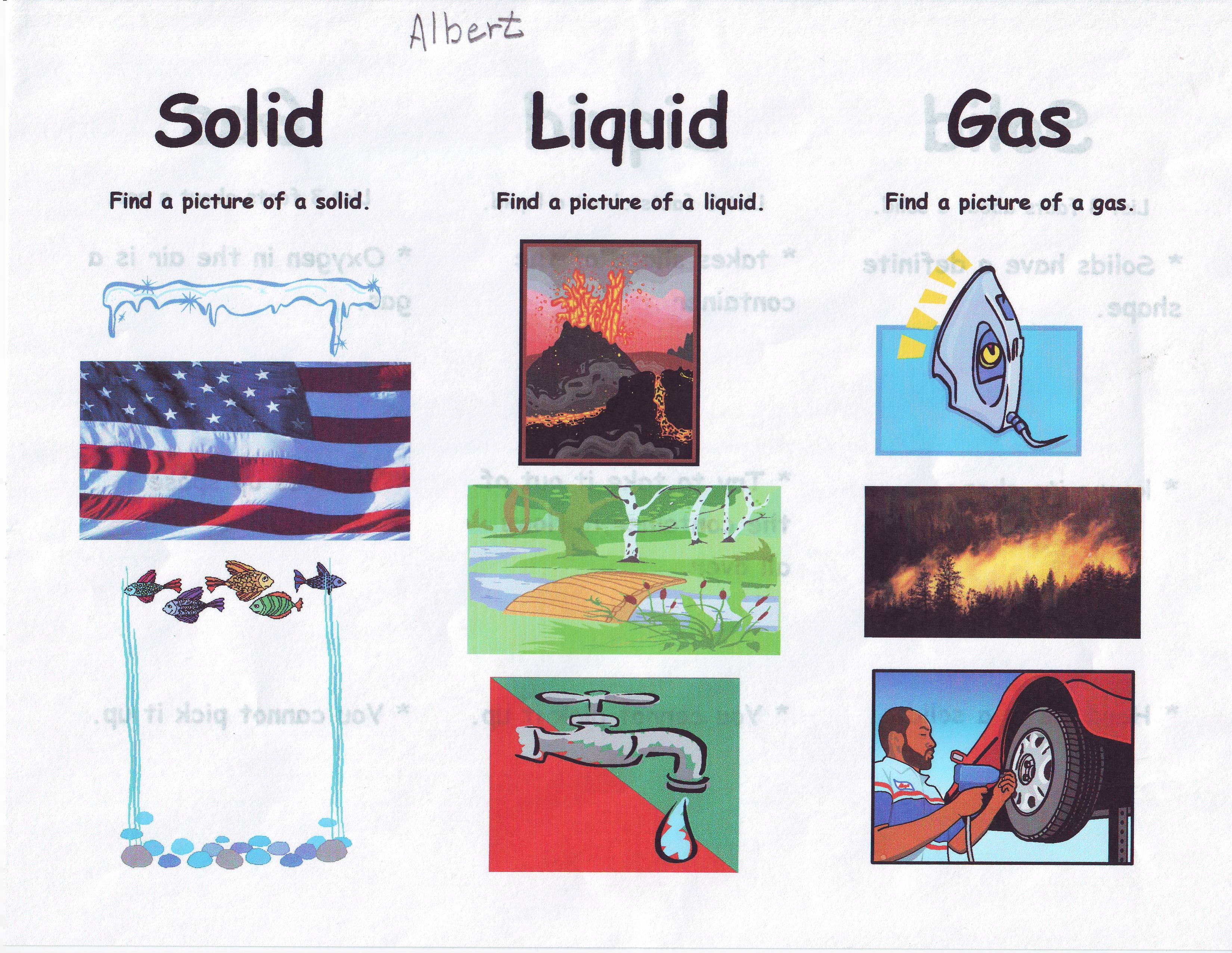
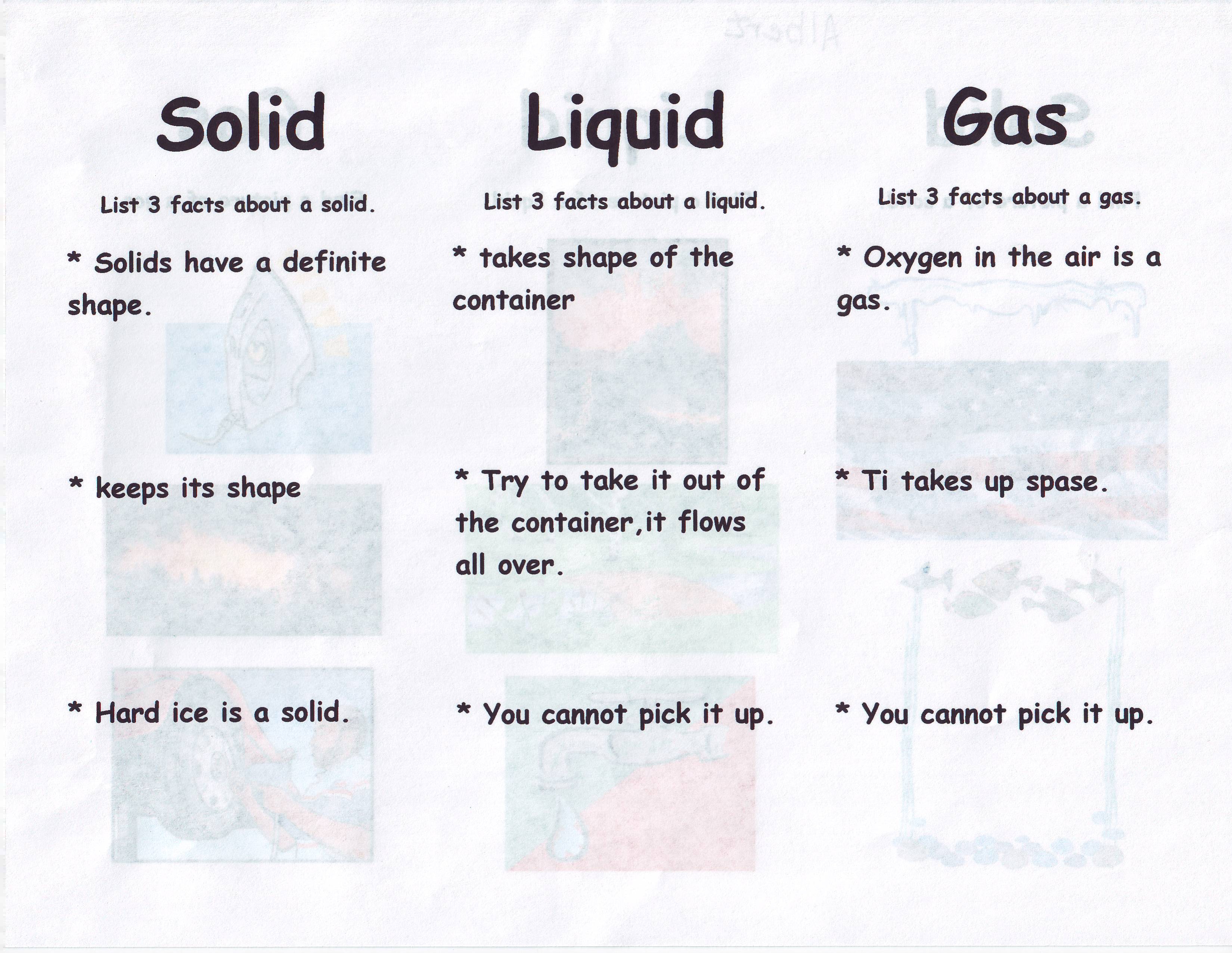
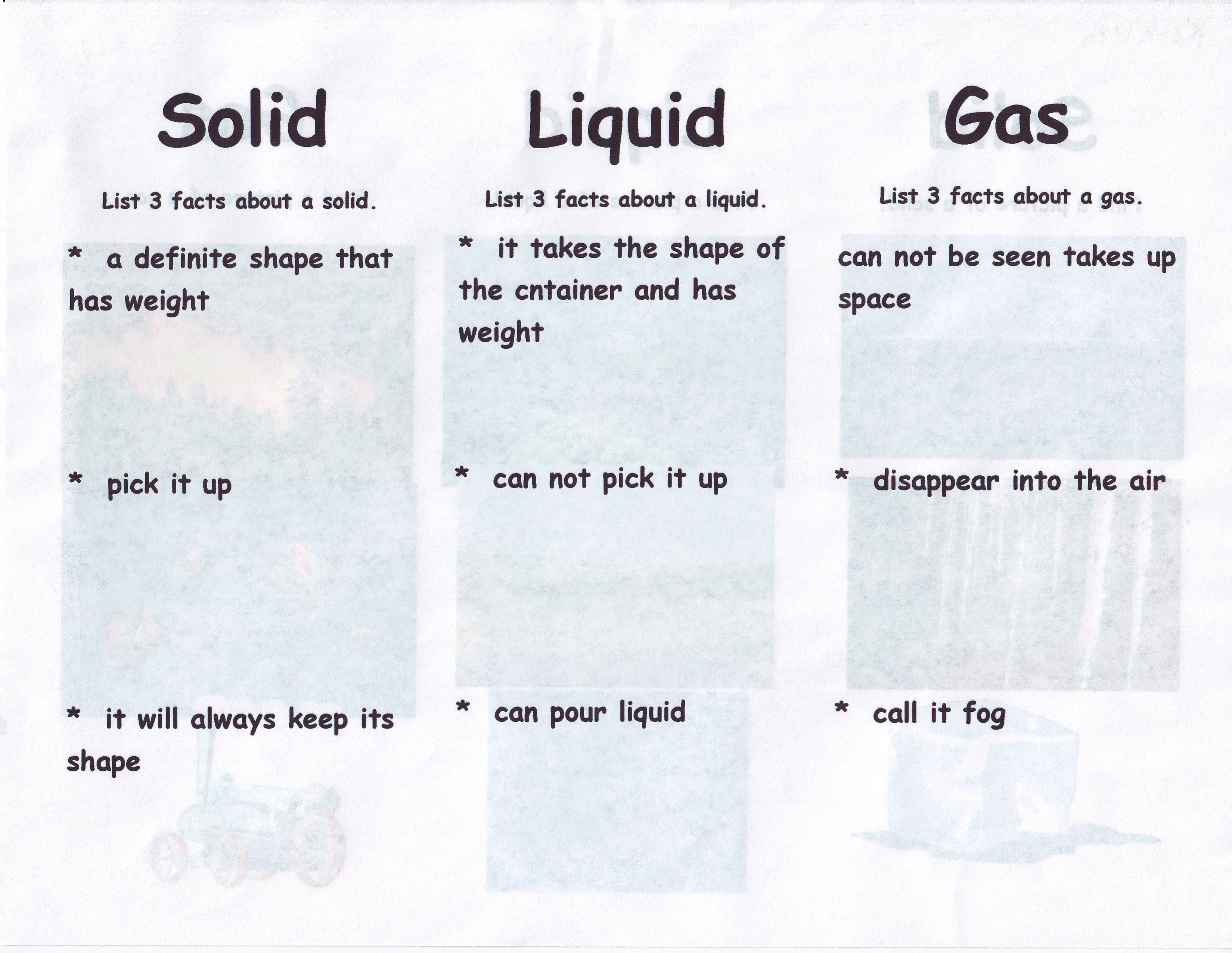
Please see the examples below of the three levels of student work.




Related Resource
Vocabulary
- matter -anything that takes up space and has weight
- molecule -the smallest particle of matter
- solid -a definite shape that has weight
- liquid -it takes the shape of the container and has weight
- gas - most cannot be seen, takes up space, and has weight