Learning Experience/Unit
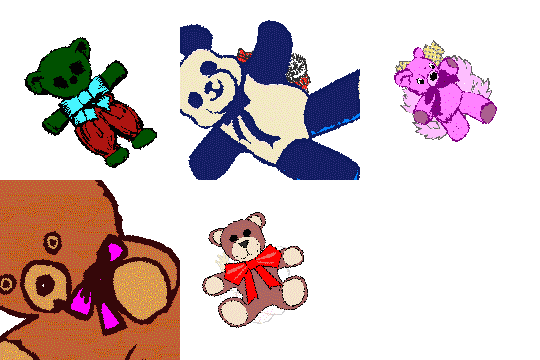
Bears by NYSATL
Subject
English Language Arts (NYS P-12 Common Core)
Grade Levels
Elementary, Kindergarten, 1st Grade
Learning Context/ Introduction
In this Learning Experience, Kindergarten and first grade students sort teddy bears according to a variety of attributes and then graph the results.
This learning experience was selected from a unit of study on bears that was taught in a kindergarten and a first grade class over a three-week period. We selected this lesson because it integrated Mathematics, Science, Technology, Social Studies and Language Arts. The study of animals and animal habitats are part of the K-1 Reading and Science curriculum.
The objectives of this learning experience are:
- Students will observe similarities and differences of bears and sort and graph according to the different attributes (size, color, and type of bear and material).
- In the Kindergarten class, children will be introduced to patterning, graphing and number concepts and begin to acquire an understanding of them. They will be able to understand the concepts of more and less.
- The First Grade children will be able to verbalize the concepts of same and different. The children will be able to understand different patterns such as AAB, ABC, etc. and continue these patterns. They will be able to make simple number sentences by observing the groups of bears
Duration
- The completion of the lesson will take three days.
- Twenty to thirty minutes a day are spent on the activity.
- Assessment is ongoing during the lesson period.
Instructional/Environment Modifications
There needs to be room for children to group around three hula-hoops spread out on the floor in a Venn diagram. No other special classroom arrangements.
Procedure
What Teachers and Students Do
Day 1
- Students will bring their teddy bears to school.
- Students will place the bears in a line on the rug. (Photos of teddy bears can also be included.)
- The teacher will read the story, Bears, Bears, Everywhere, by Rita Milios.
- The teacher will ask the students, "Can you tell me some things about the teddy bears?" The teacher will write down the responses.
- Then the teacher will ask, "Are the bears all the same? Tell me some things that are the same." The teacher will chart the student's responses.
- Then the teacher asks, "Are the bears all different? Tell me some things that are different." The teacher will write down the responses.
- The teacher and student will discuss the charts.
Day 2
- The teacher will ask the students, "How can we sort the bears into sets?"
- Using three separate non-overlapping hula-hoops, the students will sort the bears according to the attributes suggested by the students.
- The teacher will ask, "How else can we sort the bears?" Then the students will graph the bears according to color on paper using pictures of bears. The teacher will then ask, "Which color has the most bears? Which color has the least bears? How many more brown bears do we have than white bears? How did you get your answer?"
- The students will then graph the bears according to size on paper using pictures of bears. The teacher will then ask, "Which size has the greatest number of bears? Which size has the fewest number of bears?
- How many more small bears do we have than medium bears?"
Day 3
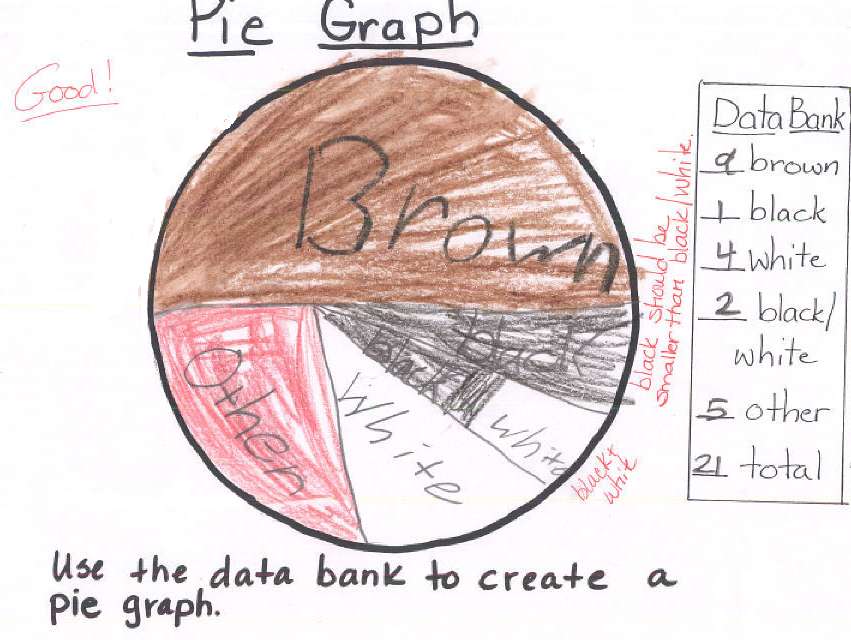
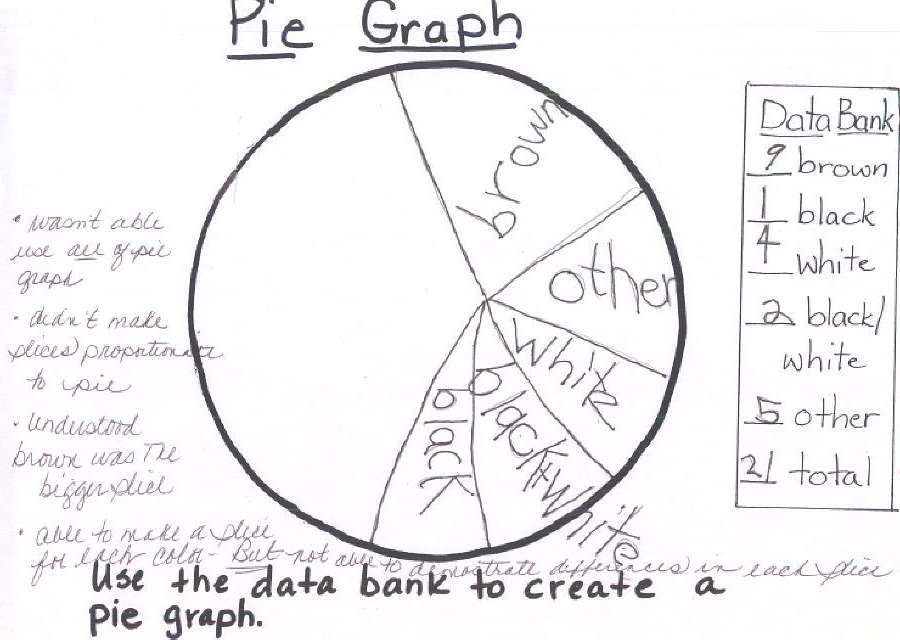
- Using the program "Graphers" (see Resources), a laptop computer, printer and the lightware technology, the students will graph the bears according to size and then according to color. Students will use a pictograph, a bar graph and a pie graph to record data.
- In the First Grade class, the students will answer questions using the data bank from the graphs.
- In the Kindergarten class, the students will learn the Teddy Bear Counting Rhyme for counting the bears.
- The First Grade students will write and illustrate a story about their teddy bears.
Resources
- Teddy Bear (Teacher may have to bring in additional teddy bears.)
- Teddy Bear Counting Rhyme
- Paper to graph (24x36), and question sheet
- Plain 12x36 chart paper
- Different size bear pictures
- Book – Bears, Bear, Everywhere, by Rita Milios
- Hula hoops
- Technology – Lightware projector, printer, computer, "Graphers" Computer program by Sunburst Communications (Houghton Mifflin)
In addition, the teacher may want to make a checklist as described in the Assessment section of this Learning Experience.
Assessment Plan
- Observe and record student responses given during class discussion. Through the use of a checklist, note the responses of each child. The checklist has the following categories:
- Engaged
- Interested
- Able to Sort
- Able to Graph
- Able to Explain How To
- Able to Use Data
- In First Grade, the students will record the results of the sorting activity using a data bank. In Kindergarten, the children will graph their bears by using pictures of different sized bears.
- Using the program "Graphers," (see Resources) the teacher will demonstrate how students can use the information collected to create, organize and describe data with various types of graphs.
- Review the written work done by the students and teacher observations with the students.
Student Work
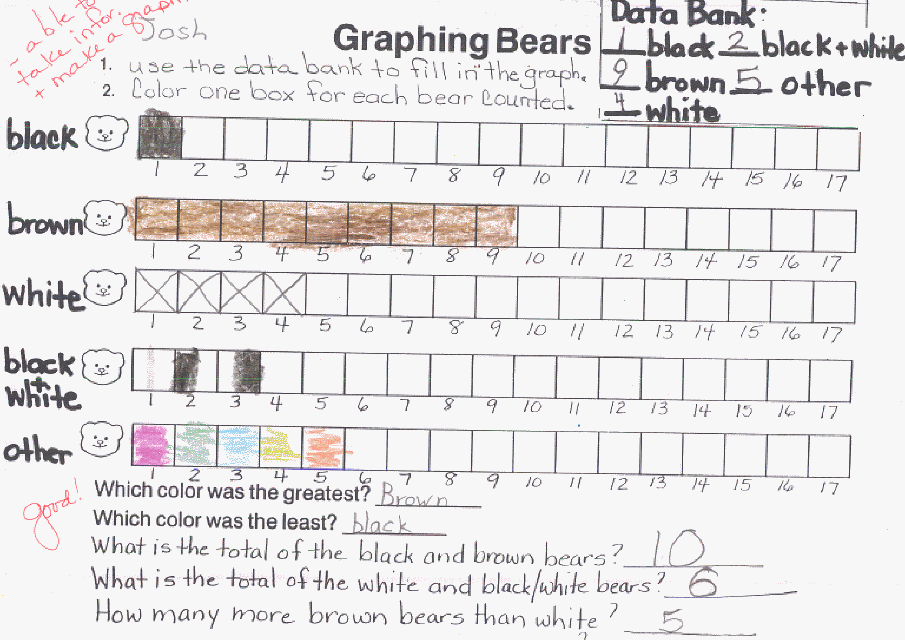
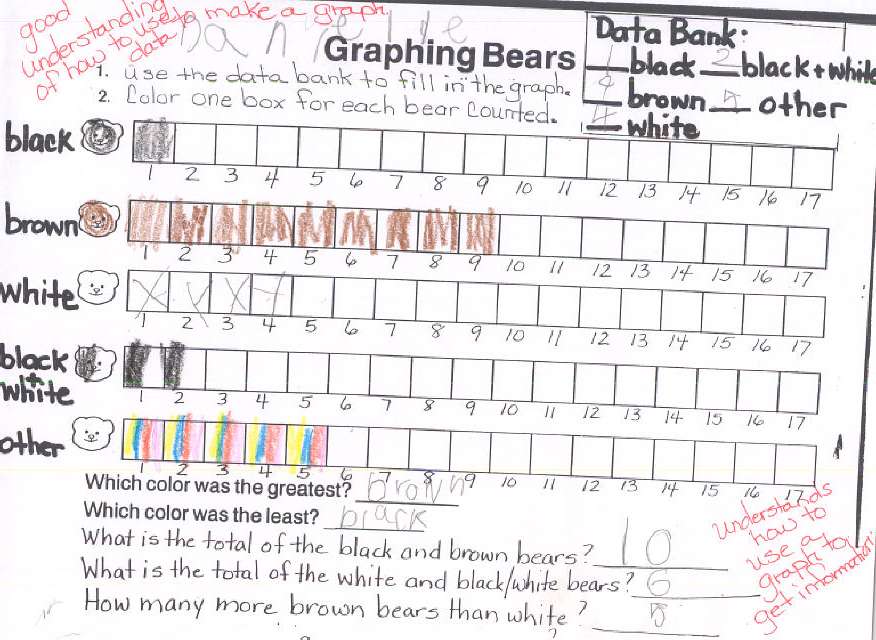
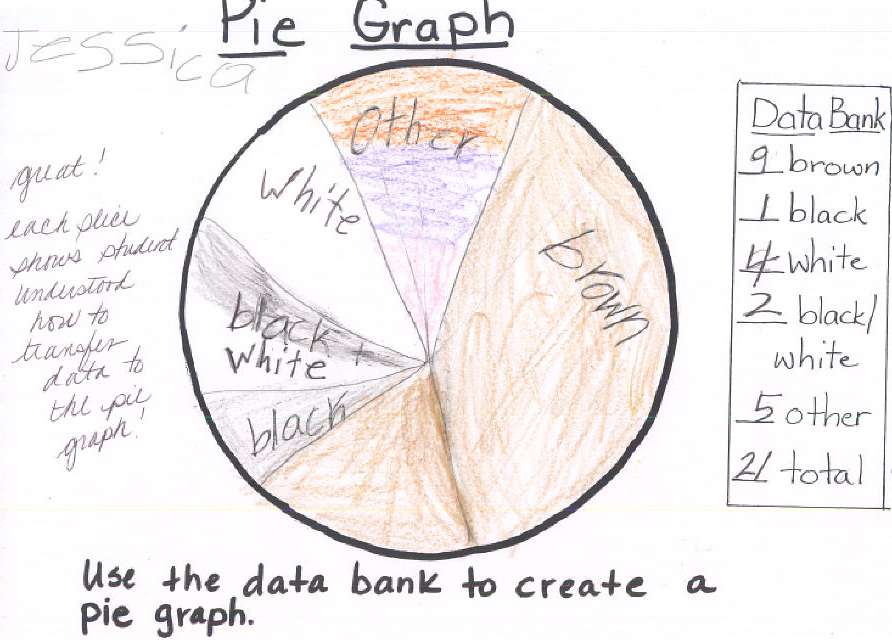
In this Learning Experience, Kindergarten and First Grade students sort teddy bears according to a variety of attributes and then graph the results.
Example 1 - Two Bear bar graphs created by the First Grade class showing the different colors of their teddy bears.
Example 2 - Graphing Bears
Example 3 - Pie graphs showing the different colors of their teddy bears
Authors
Cheryl Richter and Darlene Plavchak, Highland Central School District
Reflection
The topic chosen proved to be one of high interest to the children. Beginning the activity with their own bears created interest in the topic.
Through the use of concrete materials and manipulatives, the children became more involved and were eager to participate.
The computer program, "Graphers" sparked the children’s attention and created an interest in learning more about real graphs. (See Resources)
When the Learning Experience includes all the materials listed, it allows learning to take place through a hands-on experience, which not only generates a high interest level, but creates an atmosphere where children are more focused and retain more information.