Learning Context/ Introduction
Purpose and Curricular Connections
In this Learning Experience, students participate in a game that reinforces Spanish vocabulary recognition.
This experience can be used after the introduction of vocabulary to provide practice to aid memorization of the vocabulary. In level 2, I use it after we have worked with the words for one or two days. In level 3, I have used it to quickly review the words. It can be used in this unit or any other for which there is a large body of vocabulary.
The Vocabulary List is approximately 70% review material and 30% new material. Sentences can be used instead of single words to increase the difficulty and to provide a base for the students to initiate and sustain conversations.
Prior Knowledge:
To succeed the students must have been introduced to the vocabulary being used. I have them fill in the words they know and then I go over the meanings of all words. Because the students are engaged by playing the game, they have no problem learning the vocabulary without the entire unit concept. I do however explain that we will be using this vocabulary to write dialogues and skits about health related issues.
Duration
Making the list and the key can take an hour, depending on how many cards you want to make.
Making the cards can take about 30 minutes. However, you can have students make the cards for homework or offer it as an extra credit project. Another timesaver is to use number cards and have the questions on a list like the answer key. Then you can use the numbers for all units.
I usually do this in one 42-minute period. If the students seem particularly weak, you can have them do the studying part for one class and compete during the next class. I like doing it all in 42 minutes. It keeps everyone on task and the lesson doesn't drag.
Instructional/Environment Modifications
Students need to be able to sit in groups.
See the Procedure and Reflection sections of this Learning Experience for descriptions of how students with varying language abilities (and experience) are grouped for this learning experience.
Procedure
What the Teachers and Students Do
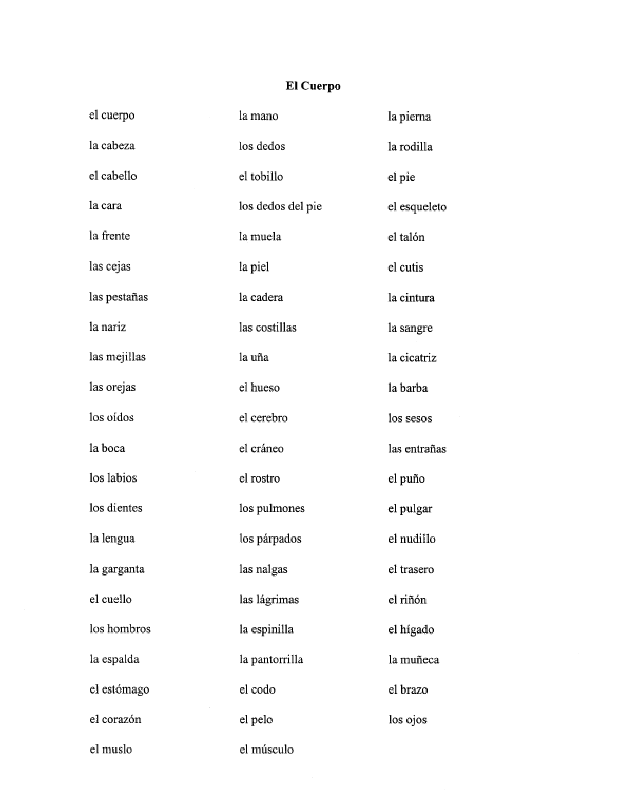
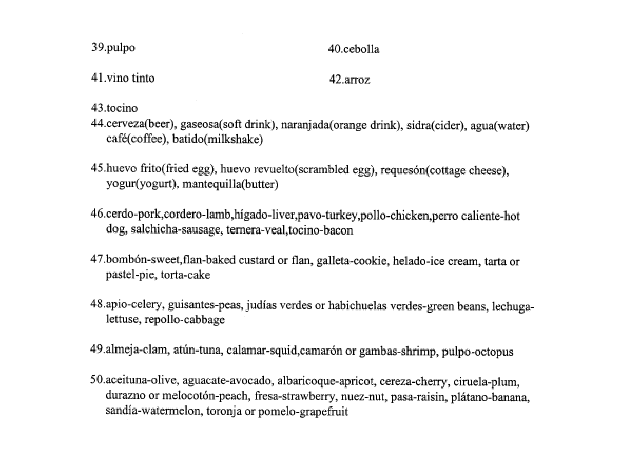
- First, I distribute a list of El Cuerpo Vocabulary Words.
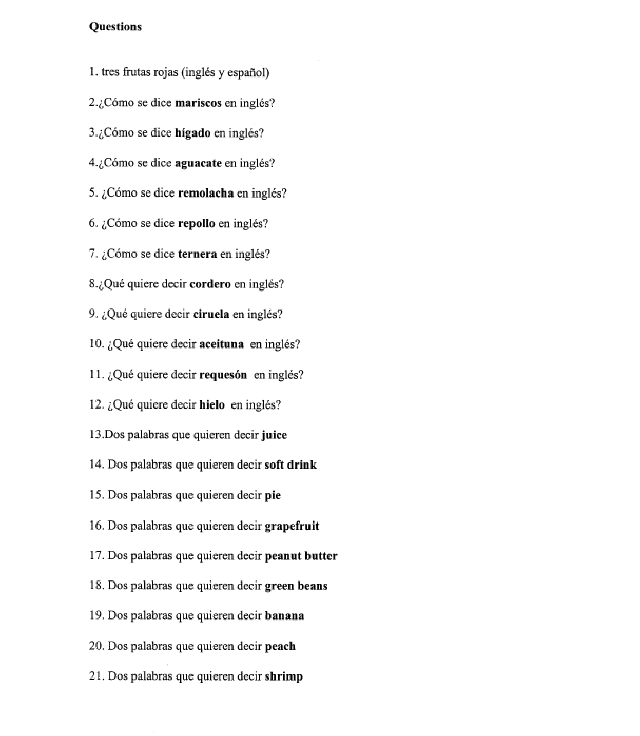
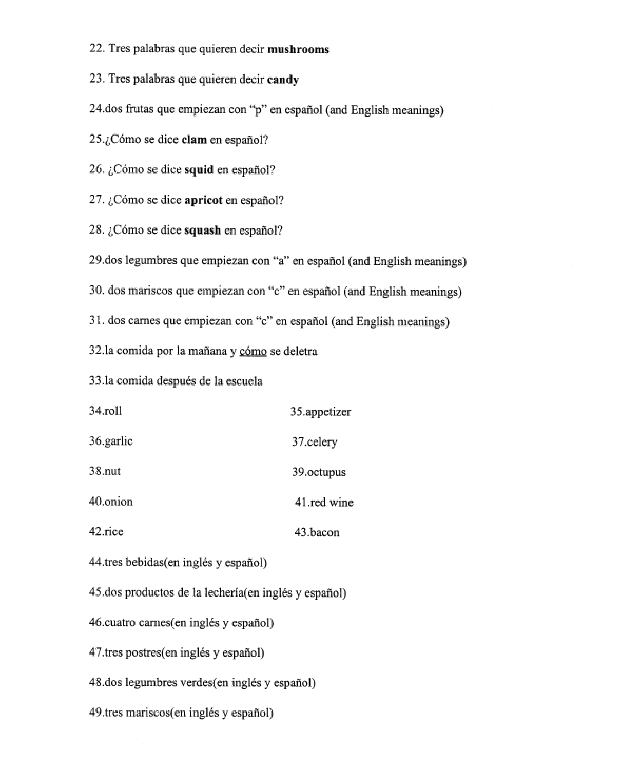
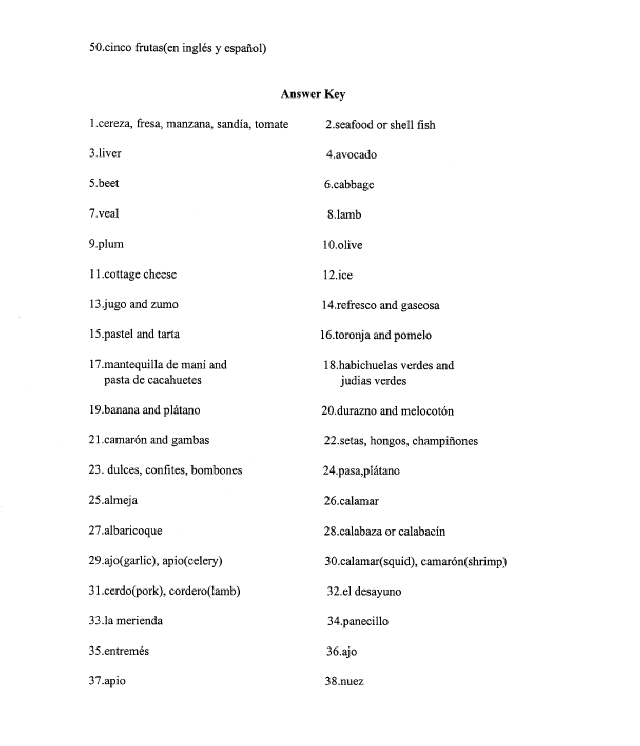
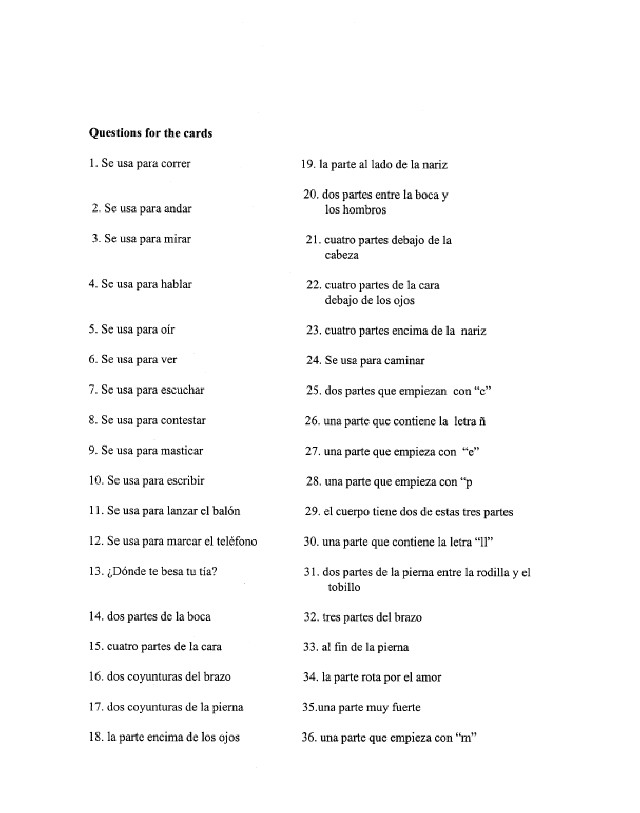
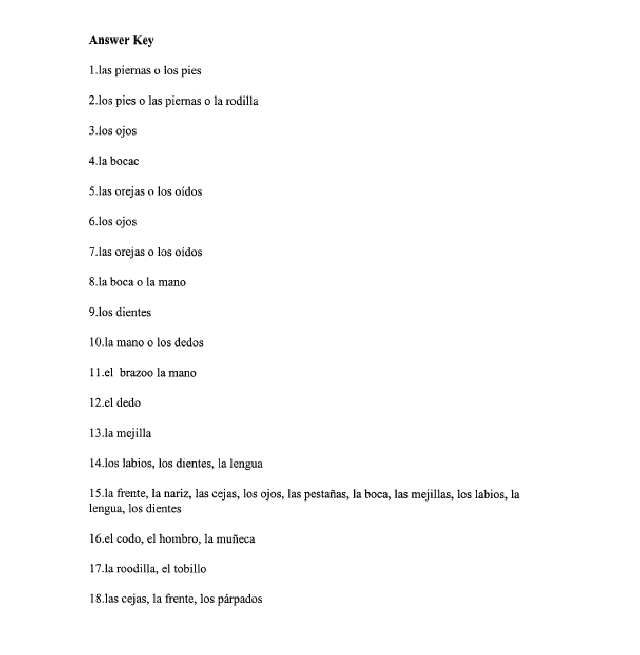
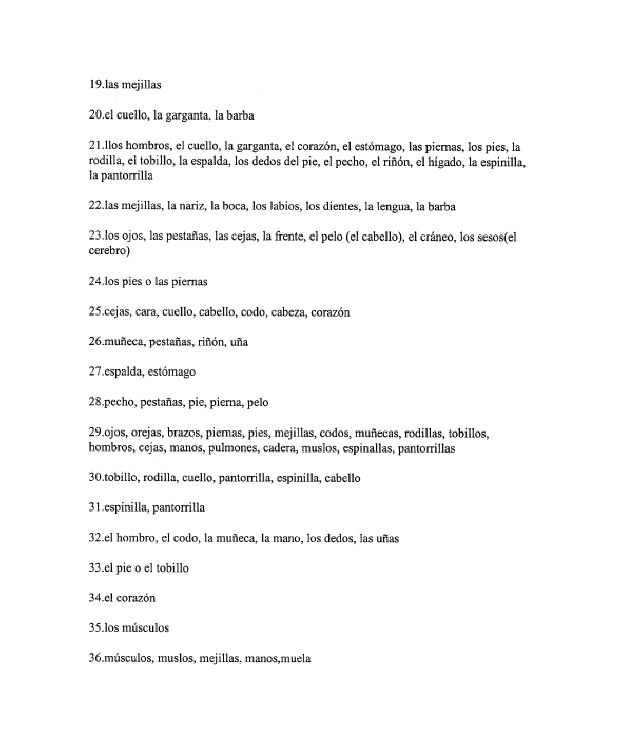
- Then I prepare a list of "clues" to vocabulary I wish to practice, cut them apart and glue them to cards. I make enough sets so that I have no more than six in a group. (I prefer four.)
- I then discuss with the students why they need to know these words, i.e. that we will use the body parts for other activities such as health related skits and dialogues.
- I divide the class into teams. I put students of varying abilities (based on teacher assessment of their ability level) into each team.
|
Team 1 |
Team 2 |
Team 3 |
Team 4 |
| Group A |
John |
Mary |
Sue |
Linda |
| Group B |
Traci |
Nicole |
Joe |
Mallory |
| Group C |
Carol |
Fred |
Jim |
Matt |
| Group D |
Bob |
Cindy |
Charlie |
Jennifer |
Thus, Team 1 (John, Traci, Carol, and Bob) is a mixed ability team. They study together from the vocabulary list provided and bring points back to this team. For competing, John, Mary, Sue and Linda would be Group A (a group of like ability.)
- Students then spend about 10-15 minutes (could be longer if you wanted to extend the activity) studying with their teams. Usually they ask each other the vocabulary words from the list provided.
- Students are then grouped so that they are competing against students of like ability. All the high achievers together, etc.
- Students then use the deck of cards to compete. One student draws a card. He reads it out aloud and gives his answer, and translates the question and answer. Students are allowed to ask me for unfamiliar vocabulary words. (I always include a few new words to help me keep track of who is on task. If there are no questions, they are not playing correctly.) If the group knows it is correct, he keeps the card. If no one knows, they consult an Answer Key. I have given each group. (I always put the answer sheet in a folder or inside a piece of folded paper so I can tell from across the room who is just reading the answer key.) If there is still a question, one student raises his hand and asks me (the judge). If the student is not correct and/or cannot say what it means, the card is placed on the bottom of the pack. Play goes to the left. The next player draws a card and the former player is the keeper of the key.
- As the end of the period draws near, I call time. We record the points of each student (the number of cards they have). The points they earn then belong to the original team. Students are often surprised to see that it is sometimes the person perceived as the low achiever in their group who brings back the most points.
The winning team receives bonus points on the
Vocabulary Quiz for the material.
Student Work
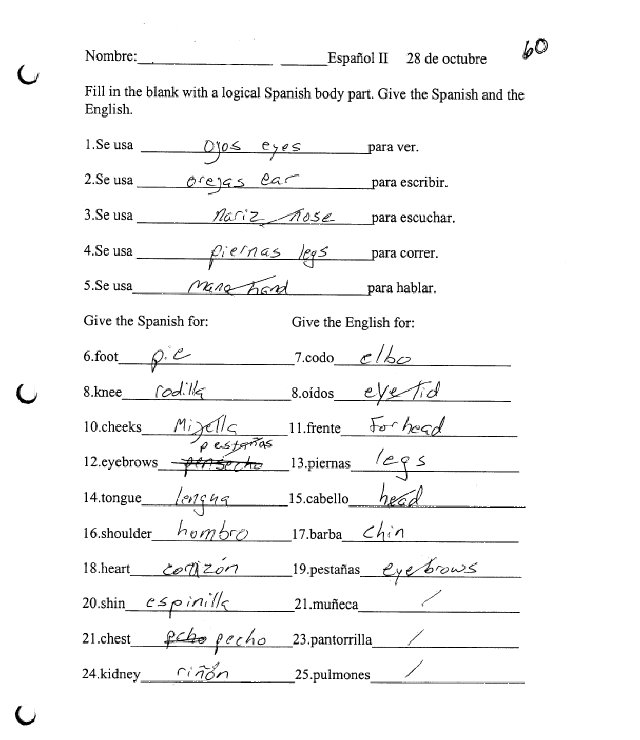
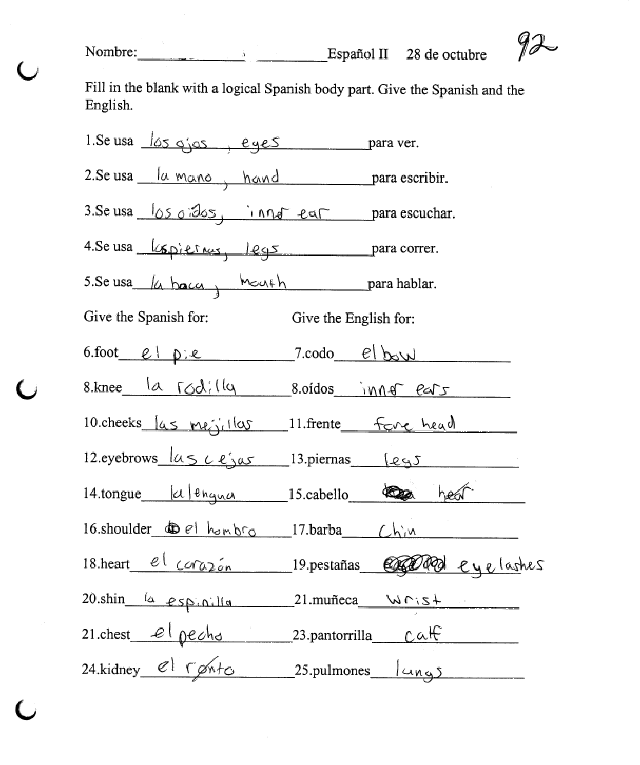
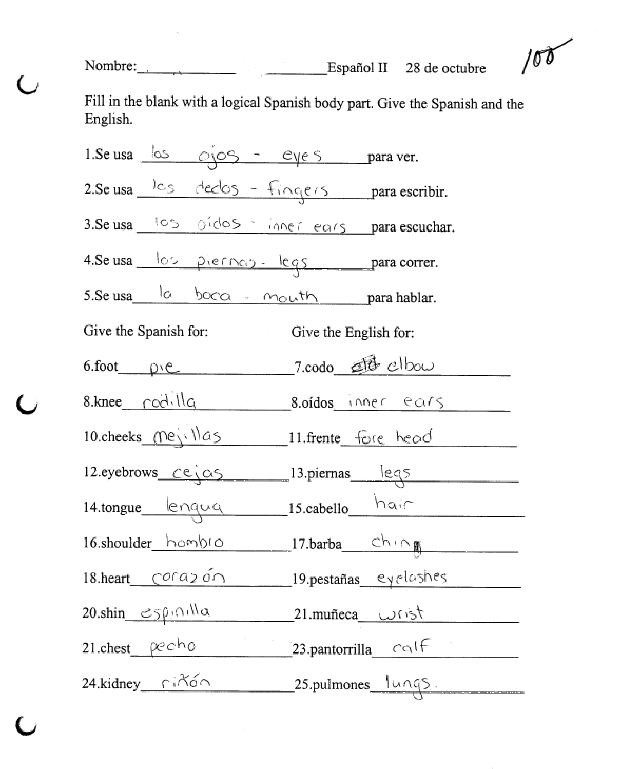
Assessment Plan
Students take a simple Vocabulary Quiz after the Learning Experience to assess the performance indicator. Students call upon repetition, rephrasing (and nonverbal cues if the assessment is done orally) to derive and convey meaning from a language other than English.
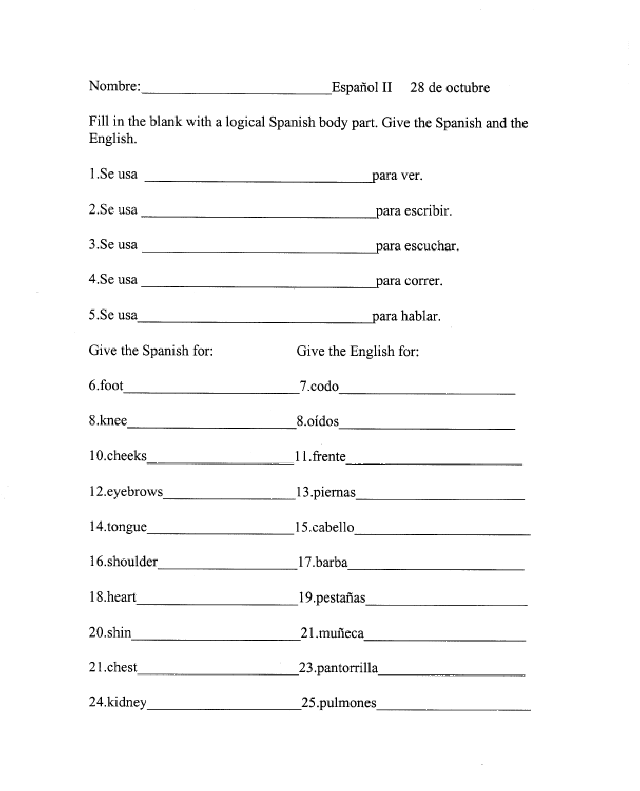
Student Work
The student Vocabulary Quiz is simply graded on a basis of 100.
Reflection
Comments from Ellen S. Hughes:
I developed this lesson after a cooperative learning workshop and after talking to my students. My better students did not like working in groups because they felt they always had to do all the work. With the inclusion of all students, this fact was often true. Inclusion can sometimes make it difficult to devise activities that benefit all students. With this game, they could work in groups and help the struggling students and they could compete against the better students. They found this more challenging. The challenge helped them to learn the vocabulary without context. Once they learn the vocabulary, they can then apply it. My less able students also liked it because they felt they "had a chance" in a game when they did not have to compete against the students who always know the answers. They also found it engaging and easier to learn the unit one piece at a time. Since our accelerated students and our traditional students are mixed at the high school, the students often complained about having certain people in their groups. With this activity, the students worked together willingly so that everyone would bring back a lot of points.
Author
Ellen S. Hughes, Waterloo Central School District