Teacher Procedure
What Teachers Do
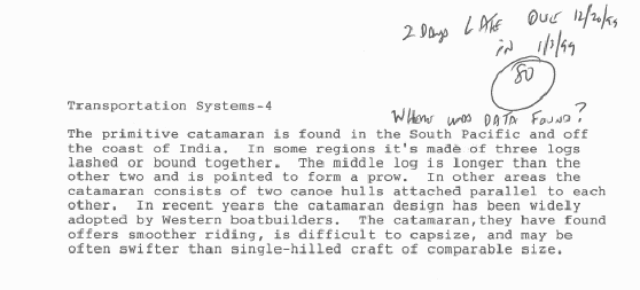
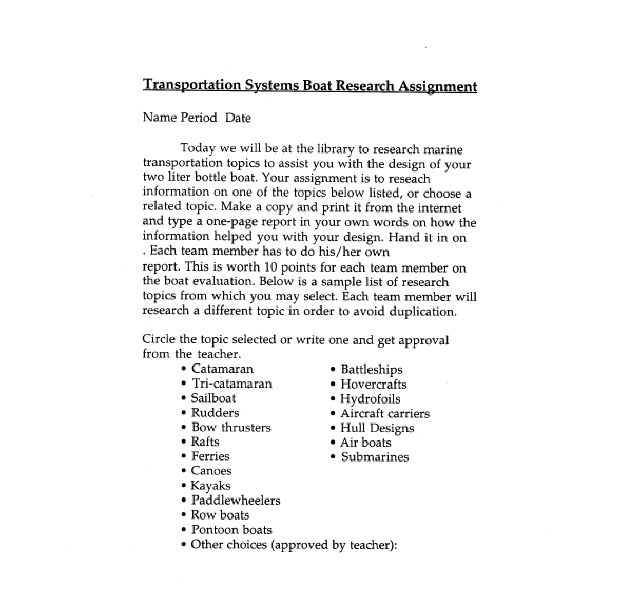
- Schedule a time with the school librarian for a class visitation to the library for researching marine transportation, so students can locate magazine articles, books, or Internet information and prepare a report that aids them in designing their boat. The librarian can select some books prior to the class visit and direct students to other possible sources. If the library is not available during the boat activity, students may have to go to the library during their free period time, during study halls, or after school, and view the librarian’s selections. The report will be written and evaluated by the teacher during the boat activity and included in the final design evaluation of the boat activity. Photocopies of articles on marine transportation will be required as part of the research portion of the evaluation. (See Transportation Systems Boat Research Assignment)
- Obtain literature about boats from the local community college library or town library. Students can do this as part of their research for a report on marine transportation.
- Explain the history, economic, social, and technological impacts of marine transportation on our environment (part of their textbook homework).
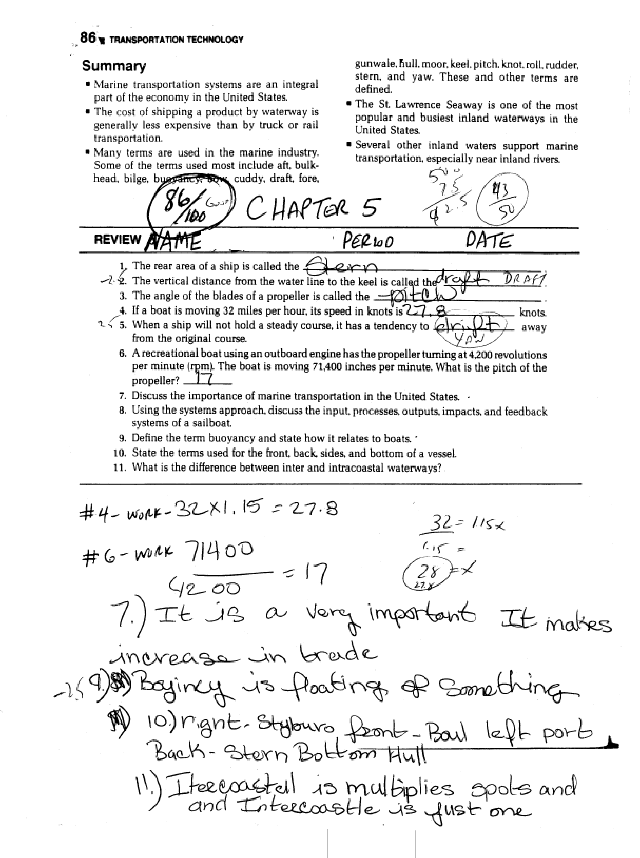
- Explain marine terminology using diagrams distributed on student handout sheets.
- Show photographs or discuss commercially built boats similar to the ones they will be designing.
- Arrange for a field trip to an Erie Canal Lock; take a trip on the Canandaigua Lady paddle wheeler, boat show room, marina, or other marine sites.
- Obtain permission to use the school swimming pool for the students to test their boats, and for race day. Make sure a lifeguard is on duty whenever the pool is used.
- Obtain the necessary materials and supplies for a remote control boat activity from a local hobby shop or other educational suppliers.
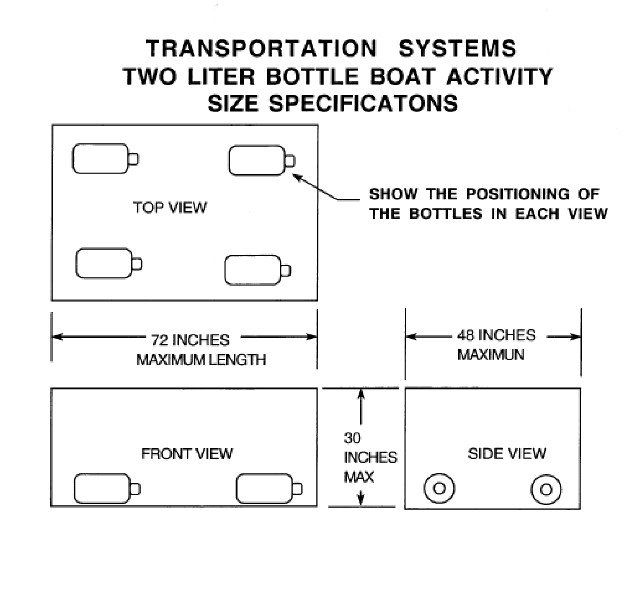
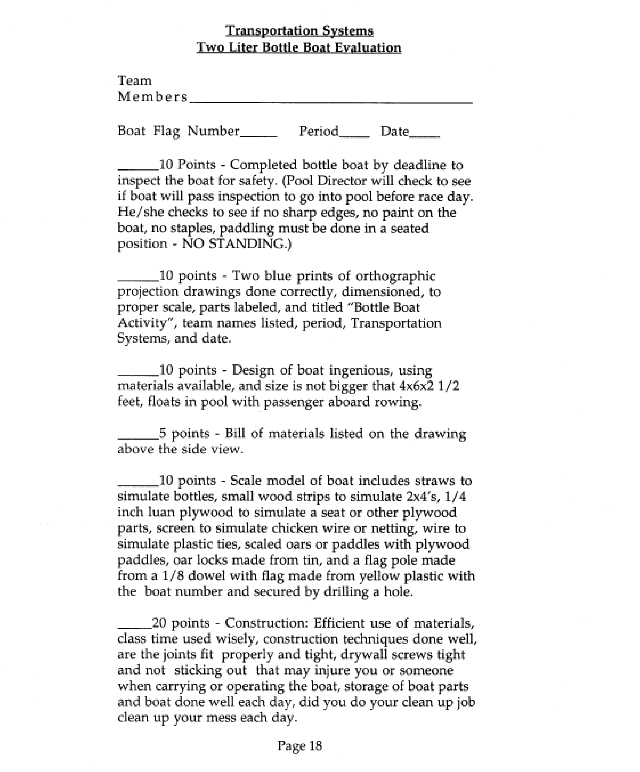
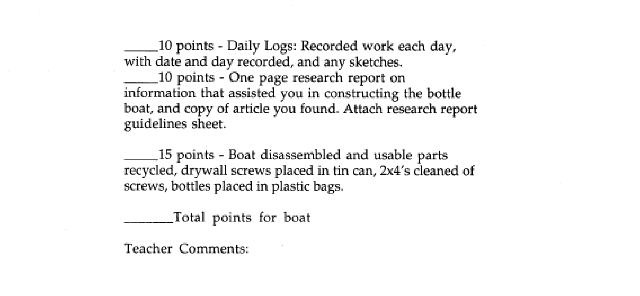
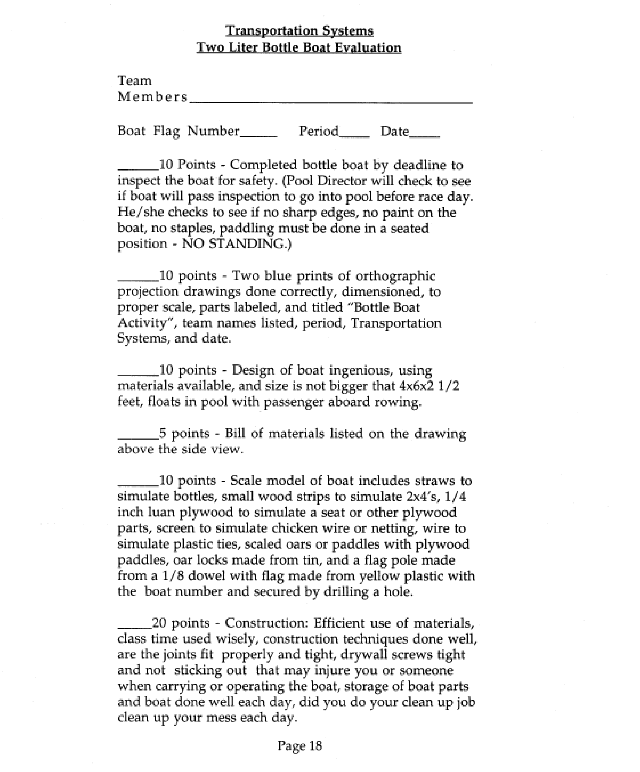
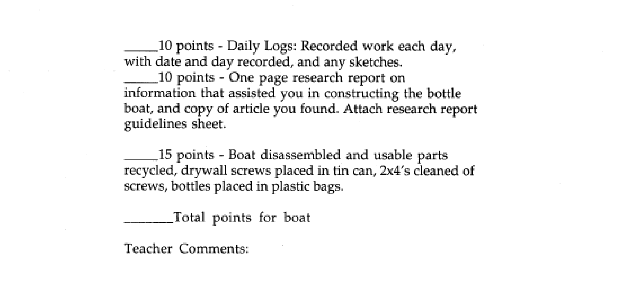
- Distribute the evaluation sheets and design specifications sheets explaining how the students will be evaluated on the boat activity. Explain that students will be keeping logs/journals of their boat-building experiences.(See Size Specifications and Evaluation)
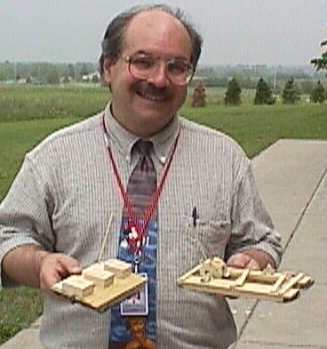
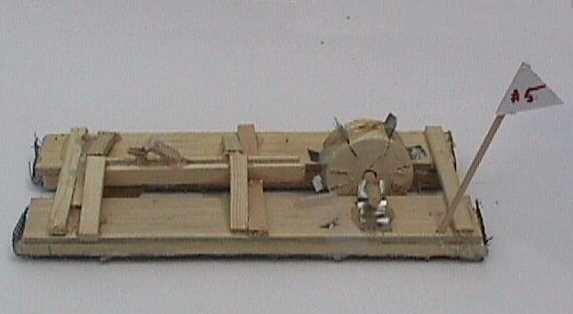
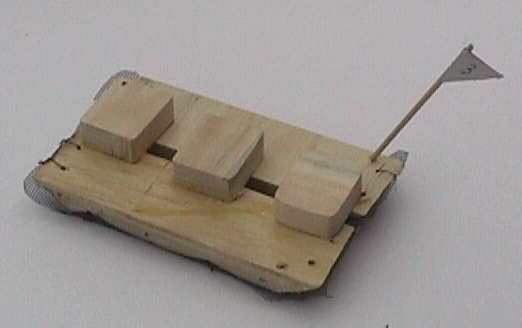
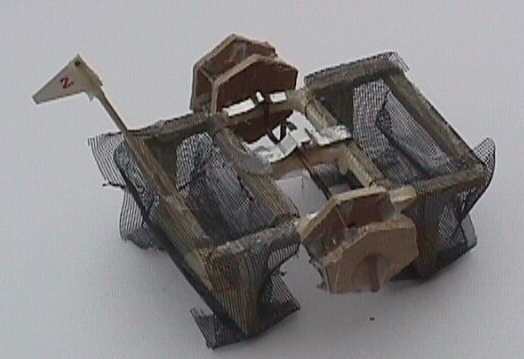
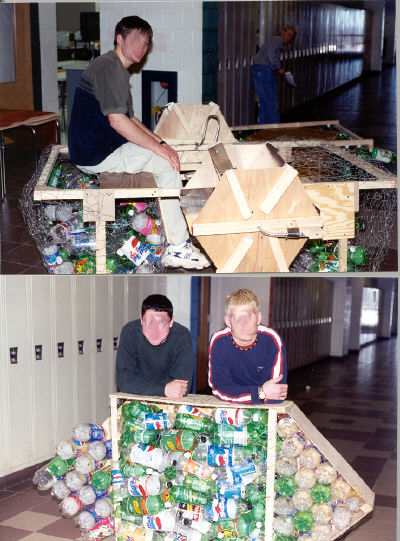
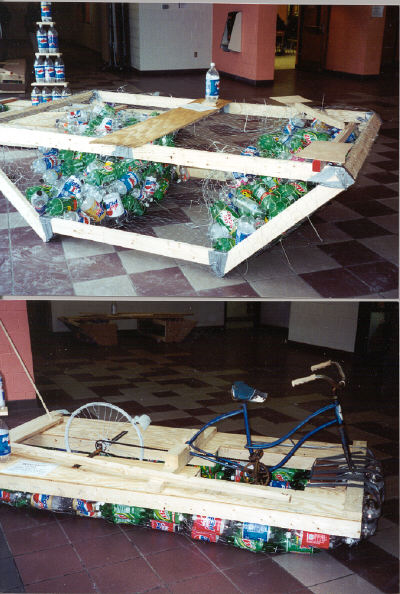
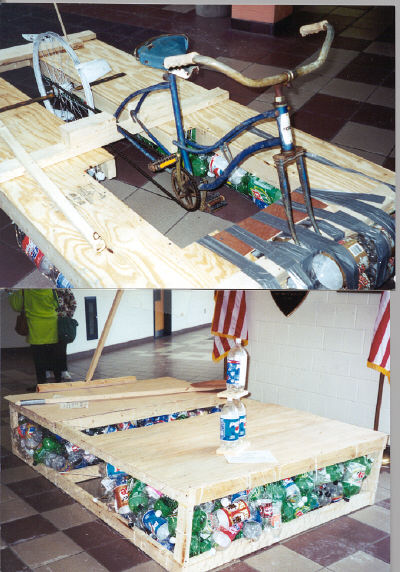
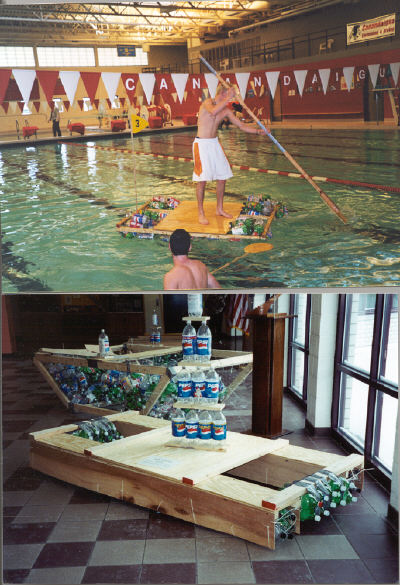
- Show and explain examples of the type of sketches and drawings that must be completed for the boat activity design. Show sample models produced in past years, if possible. (See Boat Photos)
- Explain the buoyancy of (2) two liter bottles in the sink full of water and weights added to a board across the top of the bottles.
- Explain the pitch of propellers.
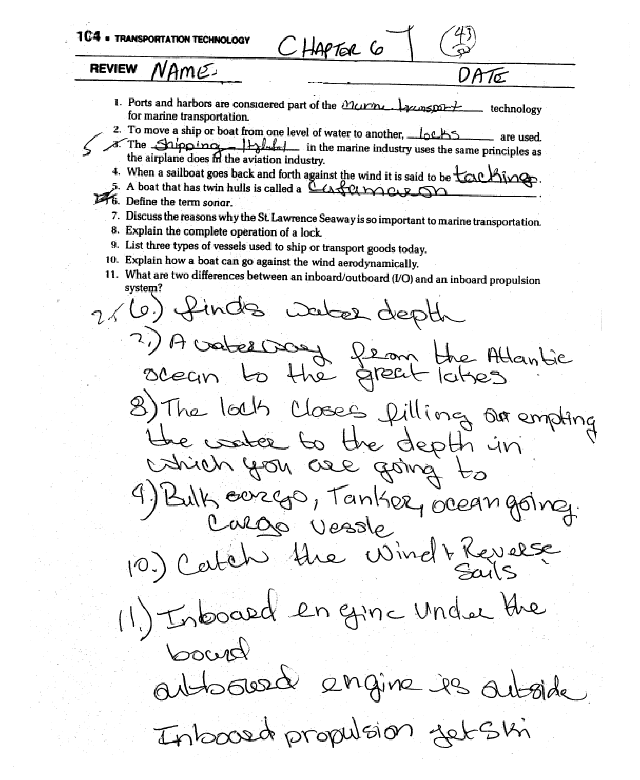
- Explain the operation of canal locks.
- Explain the operation of hovercrafts and hydrofoils.
- Explain and show examples of orthographic projection drawings, using front, tip, and side views.
- Assign students homework to sketch their home television on small ¼" 8 ½" x 11" graph paper using the orthographic projection method, for better understanding of orthographic projection.
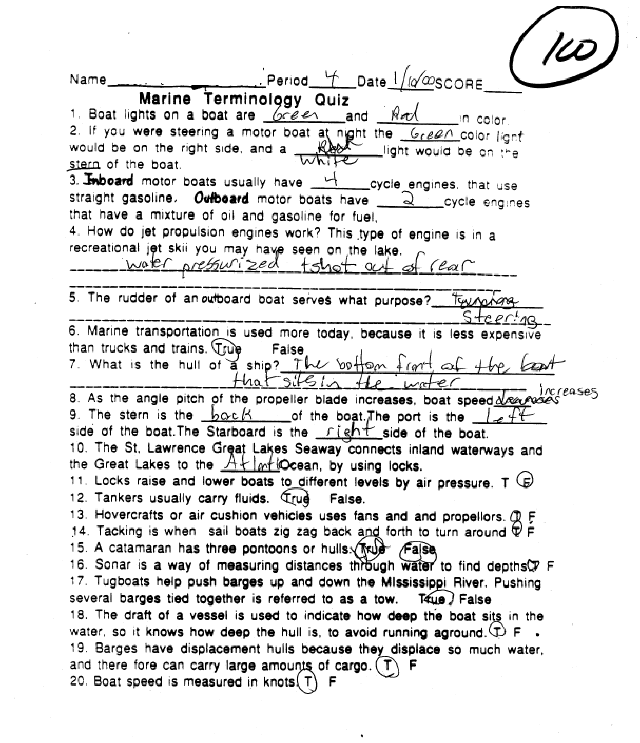
- Prepare a test on marine transportation from discussions in class, worksheets, homework, and textbook reading. (See Marine Terminology Quiz)
- Demonstrate how to draw the designs of their boat to scale on large (17" x 22") graph paper (using the orthographic projection method) that will show all their design parts. Do simple pictorial sketching to illustrate parts of their boat design that may be difficult to understand.
- Explain and demonstrate the safe use and operation of machinery and tools that may be used for constructing the boat.
- Explain and demonstrate the safe use of materials and supplies that may be used in constructing the boat.
- Explain and demonstrate the safe use of fasteners that may be used in fastening parts of their boat.
- Prepare a safety test for each machine demonstrated, general technology lab safety, and explain that a 100% must be obtained to go to work.
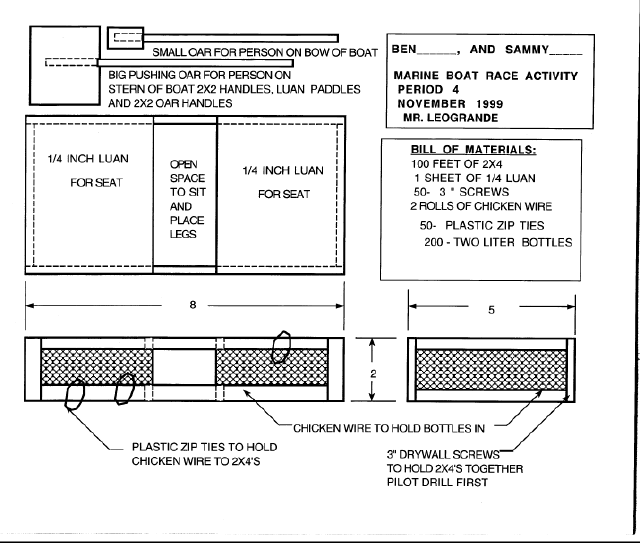
- Explain that a sample bill of materials for building their boat should be included on their graph paper drawing in the space above the side view.
- Videotape the boat-making and testing for each group. The students will later prepare a script that goes with the videotape.
- Evaluate daily logs or journals regularly and when the boat is completed.
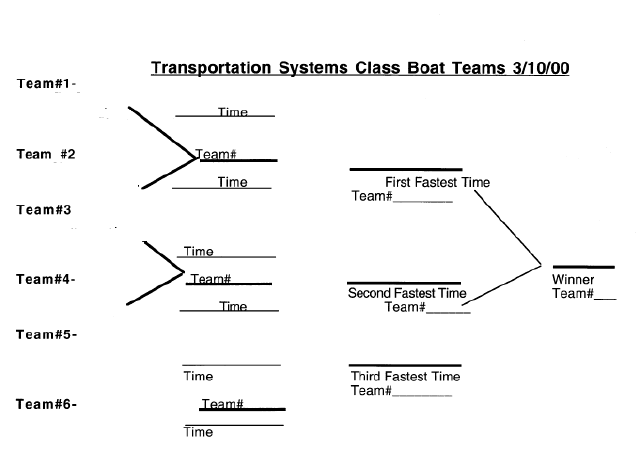
- Develop race brackets to record times of each boat. (See Class Boat Teams)
- Invite students, teachers, administrators, school board members, and legislators to boat race day as spectators and assistants.
- Score each part of the evaluation sheet individually with the team. (See Evaluation)
- Show students the videotapes and photographs of themselves while they were working on their vehicle and if possible, show videotapes of past boat races.
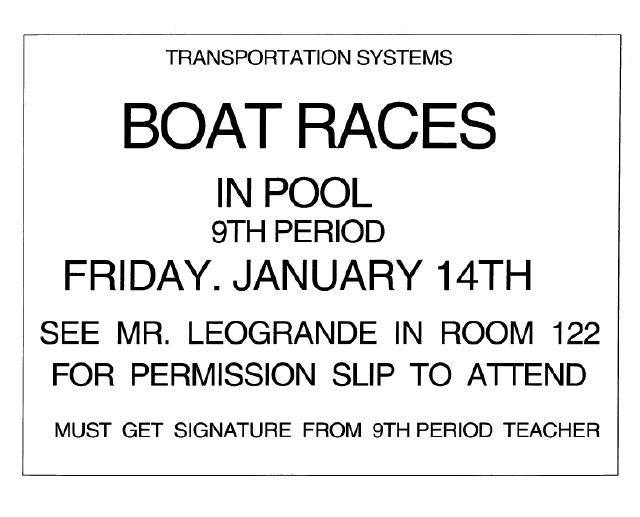
- Promote the boat races on the school television and public address system, as well as in community newspapers, the school newspaper, and local newsletters. Develop an 8 ½" x 11" sign announcing the boat race day, time, and place, and distribute around the school. (See Promotion Flyer)
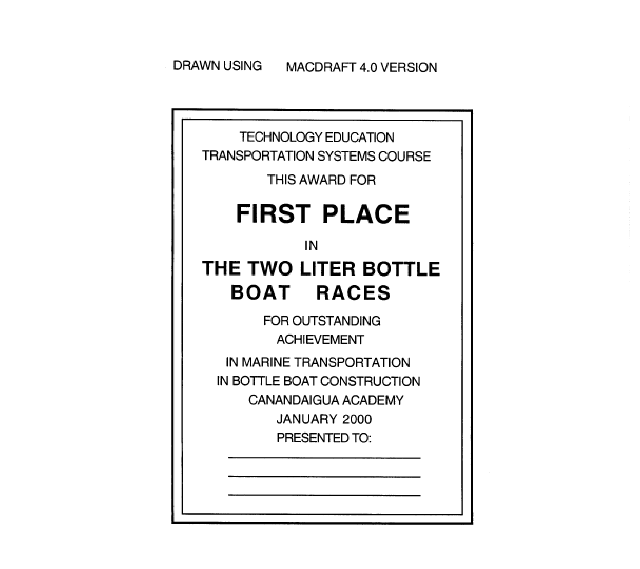
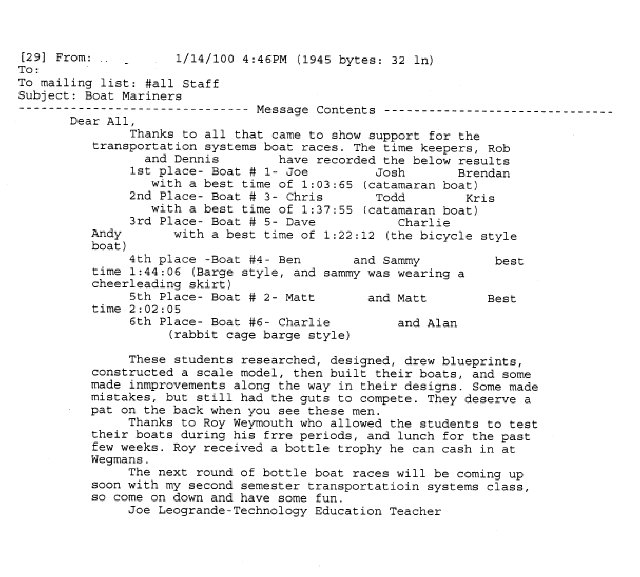
- Conduct the races as described in Learning Context. (See Class Boat Teams, First Place Award, Thank You Memo, and Boat Photos.)
Student Procedure
What Students Do
- Participate in class discussion about orthographic projection, and topics related to marine transportation.
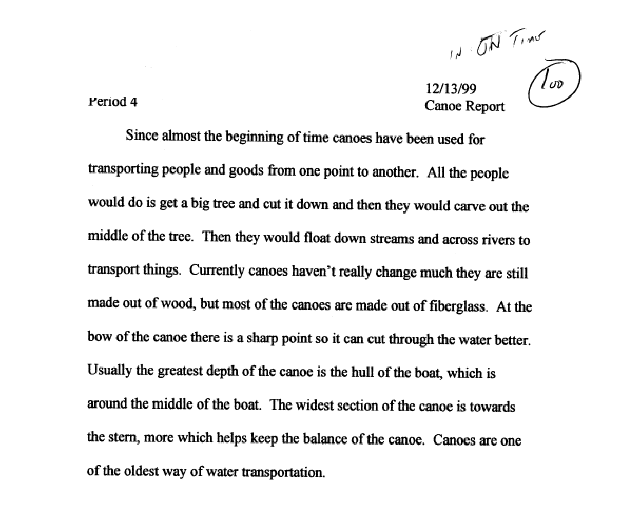
- Research marine technology, rafts, catamaran boats, ships, buoyancy, and boat propulsion systems and other related topics provided by the teacher, or choose their own topic with teacher approval, using library books, periodicals, or Internet research. Students may also visit marinas, and boat show rooms for information. Each team member completes their own word-processed research report and is evaluated on the evaluation sheet. (See Transportation Systems Boat Research Assignment and Evaluation)
Record the author, title of book or magazine, title of article, magazine date, and copy an article or sign out a book or magazine pertaining to the research on marine transportation for further research. Emphasis should be on researching one form of marine transportation.
Copies of the articles are submitted with the report. Record and copy any Internet web documents.
Students also investigate marine transportation past and present, transportation innovations, marine products, canal systems, cargo transportation, yacht races, economic impacts, and social impacts.
They investigate the impacts of marine transportation on the environment and the development of boats, canal systems, products for the present.
Write a one-page report on the articles researched explaining what was discovered, and how it will help to design the two liter boat. Copies of the articles are submitted with the report.
Talk to family members, other students, and teachers about the project, ask for help and ideas in creating the design.
- Brainstorm ideas from class discussion, and make sketches.
Select and use appropriate materials, equipment, and tools and learn to optimize or use tradeoffs when building the boat. Students are expected to work effectively on task in a lab, cooperate with fellow students and teachers, and present their findings in a written summary and on videotape, using the design brief explaining the activity, size specifications, materials available for scale model, materials available for the boat, evaluation criteria, procedures, due date, textbook homework, and worksheets.
- Complete a homework assignment to sketch the home television on graph paper, using the orthographic projection method.
- In teams of two, begin drawing designs full size on 17" x 22" graph paper using orthographic projection (front, top, and side views). Small pictorial sketches may also be drawn for clarification on the graph paper. Students identify the names of materials on the drawing, using leader lines to point to parts that may be difficult to understand.
Use computer aided design drawing programs to draw their boat orthographic projection of students have experience on CADD systems available, or show interest in drawing their boat on a CADD program.
Sketch small pictorials of complex parts that may be difficult to show in an orthographic projection.
Use rulers and traditional drafting tools to produce scaled orthographic projection drawings, one inch to a foot (1"=1’) scale model of the boat from the drawing, using two inch pieces of straws to simulate the bottles, wood strips to simulate 2 x 4’s and oars, window screen to simulate chicken wire to secure bottles, small pieces of wire to simulate plastic ties to hold chicken wire, and masking tape to simulate duct tape. The scale model and the blueprints or CADD drawings will be evaluated on the evaluation sheet.
Complete a bill of materials needed, showing all parts, and quantities on the 17" x 22" graph paper.
Search the Internet for boat information. Engineering design is evident when students search the Internet for information for boat designs, develop drawings, build a model, and evaluate it.
Obtain materials provided to or items found at home.
Design and material changes to improve the boat are encouraged.
- Pass the machine and tools safety test with 100% accuracy to go to work in the lab.
Begin processing materials and constructing the vehicle. Attach bottles to the wood frame. Be careful of the chicken wire.
Use science, math, and technology skills to produce a boat, and prepare a summary report illustrating skills in each of those areas. Interdisciplinary areas that will be understood and utilized are analyzing drag, buoyancy, material processing, design drawings, and choosing the best parts and materials for the optimal solution.
Make necessary adjustments during construction.
Keep a daily log of work on prepared daily log sheets and sketch ideas.
Explain the operation of the boat in a summary report and videotape explaining how their boat performed and if the boat worked as planned.
- Test boat in swimming pool.
By testing the boats in the swimming pool, students will understand mechanical advantage when designing oars, oar locks, and location, forces of drag and the affects on the boat efficiency in the water, boat buoyancy, balance, center of gravity, the affects created by the weight of passenger and boat.
Discuss advantages and disadvantages of the boat design with the teacher and teammates to improve efficiency.
- Complete a video script describing the design of the boat and how it worked.
- Test the time it takes to reach the end of the pool and returning with a new person paddling.
- Meet with the teacher when you are completed with all the required assignments and have your boat evaluated using the evaluation sheets provided.
- Develop an 8 ½ x 11 paper sign, announcing the boat races, and place around the school to advertise the boat races.
- Participate in the boat races. Disassemble the boat when the races are completed, recycle usable materials, save bottles for recycling, discard trash, or keep the boat for use in a pond.
Learning Context/ Introduction
Purpose and Curricular Connections
In this Learning Experience, students design and build full-size boats that are raced in the school’s swimming pool, paddled by the designers. The boats are made out of two-liter plastic bottles, chicken wire, and plywood. The students are enrolled in an elective Transportation Systems Technology course.
There are four sections of Transportation in the course: Space, Air, Land and Marine. The two-liter bottle boat activity for the Transportation Systems course was developed as part of the marine transportation technology unit. This is a high interest activity where teams of two students cooperatively learn to work together through research, sketches, designing, material selection, two liter bottle collection, scaled orthographic projection drawings, detail drawings, scale model boat building, testing, optimizing, construction of the boat, and the presentation of their boat. They then compete against other student teams by racing their boats in the high school swimming pool.
After the race, teams are required to recycle the boat parts, or they can take the boat home for their own use.
The purpose of this Learning Experience is for students to investigate and learn about buoyancy, boat hull design, displacement, methods of propulsion, and boating safety. The boat designed by the students must be powered by oars, paddles, or other self-propulsion method. No motors, engines, or purchased items can be used to power the boat. All parts of the boat must be built by the students, including the oars. The two liter bottles must be used for flotation, and bottles must be in contact with the water (no enclosed hulls). The maximum size of the boat is 6 feet long x 4 feet wide x 2’ 6" high (so it will fit through the pool doors).
Students compete against each other for the ability of the boat to travel and complete the race, as well as efficiency. All boat teams receive awards and trophies for their accomplishments on race day. The trophies are made from two liter bottles and wood. Each student is required to wear a necktie to show professionalism (these are provided by the teacher). Each boat is required to have a flagpole with the boat number. Testing of the boat is done after school to see how well it performs.
The races are scheduled after school to allow anyone who is interested to attend the races. The races serve as an opportunity for students, teachers, and administrators to observe technology in action. Relay races are held in which students paddle their boats to the end of the pool, where a teammate gets on and paddles back to the starting point. Volunteer teachers and administrators record times, and provide other assistance. Volunteer teachers and administrators record times and provide other assistance.
Prior Knowledge
Prior to this activity, students are taught the history of boats, types of recreational vehicles (such as hovercrafts, hydrofoils, sailboats, jet skis, inboard and outboard type boats), canal system and locks, propeller pitch, knots vs. miles per hour, boat lights, shipping industry, engine types, boat hull materials, and boating safety. Students also manipulate remote control electric boats in the pool to learn the operation of the remote control boats, radios, and learn how to repair them.
Students may attend a field trip to an Erie Canal lock, and take a trip on the "Canandaigua Lady," a local paddle wheeler. Students are assigned homework in their textbook, as well as marine transportation worksheets to emphasize boat terminology, and are tested on the material. Informational pamphlets on the U.S.S. Intrepid Sea, Air and Space Museum, and the U.S.S. constitution also add to learning.
Students are taught how to use available materials and process those materials using tools and machinery safely. They construct their designs according to their drawings. By identifying a problem, designing a solution, selecting the best solution, constructing the boat, optimizing and modifying their design, testing their design, and presenting their finished boat on videotape in the pool, students utilize the engineering design process.
Author
Joseph M Leogrande, Canandaigua Academy School District
Resources
- 8 foot 2x2's for wood frames or ripped 2 x 4's
- Small pieces of wood to simulate 2 x 4's
- ½ " and ¼" plywood for boats
- Electric soldering gun, solder, and electrical tape to connect wires for remote control boats
- 17" x 22" graph paper to draw design in orthographic projection
- Drafting tools, such as pencils, erasers, rulers, circle templates, compasses, t-squares, 30 and 45 degree triangles, drawing boards, and tape
- Plastic ties to fasten chicken wire to 2 x 4's (Note that plastic ties are very important to avoid injury. Do not use wire.)
- Hot glue gun, glue sticks, and wood glue to fasten wood and parts together for scale model
- Plastic straws to simulate two liter bottles
- Remote control model boat kits with extra batteries, and radio transmitter
- Battery charger for remote control boats
- Assorted lengths of drywall screws to fasten 2 x 4 frames for boats
- Chicken wire or rope netting to hold bottles on frames
- Tools, machinery, and safety glasses to process materials
- Assortment of small wood and sheet metal screws
- Trophies made out of two-liter bottles and plywood. (See Boat Photos)
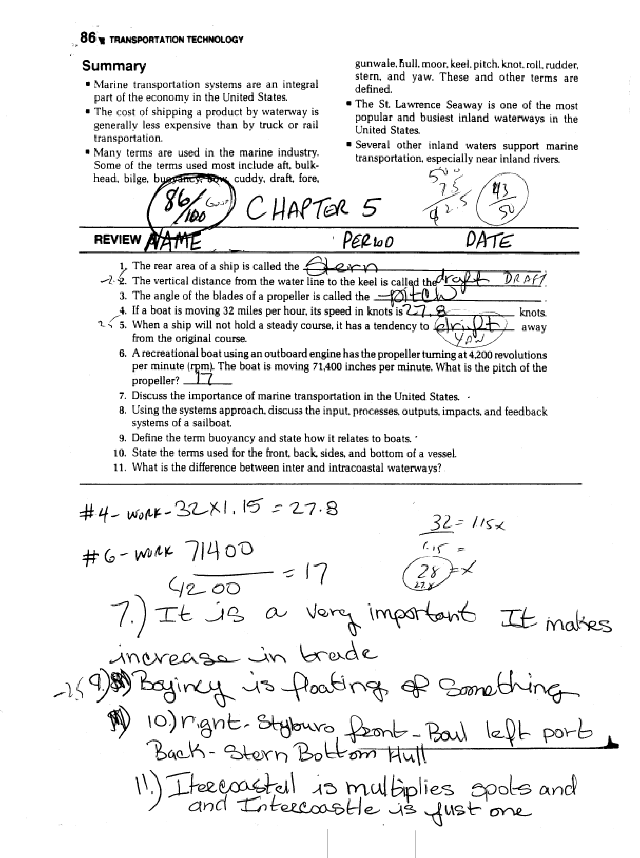
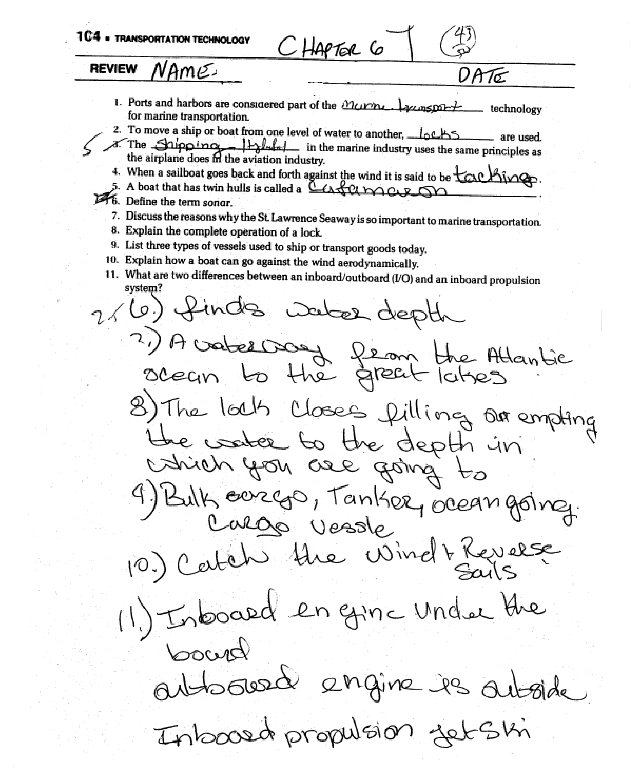
In addition, quizzes are tied to the textbook. In this case, the following quizzes were used:
Assessment Plan
The teacher is routinely assessing the progress of the students. Examples are given below:
Marine Terminology Quiz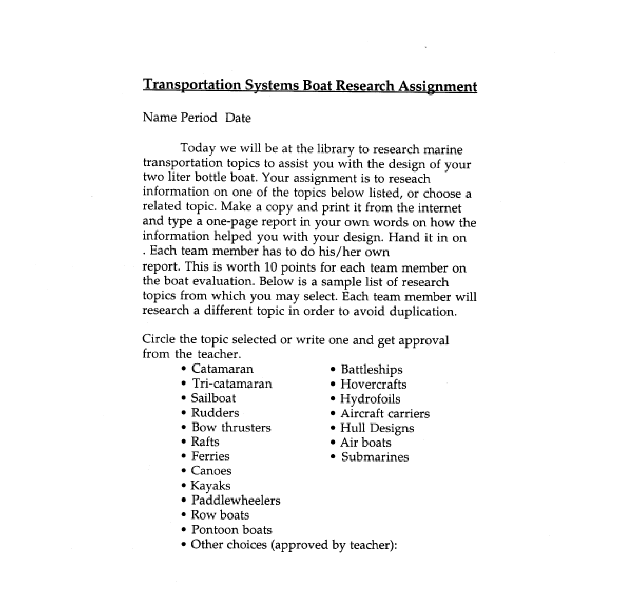
Duration
Two to three weeks to teach information described in the Learning Context (Prior Knowledge) such as the history of boats, recreational vehicles, canal systems, engine types, shipping, boating, safety, etc.
About five weeks to teach machinery and tools use, materials, safety test, design process, marine transportation terminology, orthographic drawing techniques, construction of boat, testing of boat, textbook homework, summary reports, research, videotaped presentation and team evaluation.
Instructional/Environment Modifications
This activity can be taught in any technology education facility with machinery, tools and supplies as well as space for storage and construction. All students with a wide range of abilities can construct this vehicle. This activity can be done by students individually if a two-person team is not possible. A swimming pool or pond must be available to test the boats. Instructional modifications could include emphasis on the concept of buoyancy, the process of building a boat and the process of designing for the competition. Certified lifeguards should always be assigned to boat races, especially if the race is held on a pond.
Reflections and Feedback
Comments from Joseph Leogrande:
This boat activity has been done for several years by the Transportation Systems classes. This unit can be accomplished successfully by all students. Students learn about marine terminology, buoyancy, materials selection, machinery use, portable power tool use, and hand tool use. They also learn to document work on daily logs or a journal. Research of boats and marine transportation utilizing the Internet, library books and periodicals, encourages information outside of school. The engineering design process teaches students to optimize throughout the activity reevaluating their materials and their drawn design. Students learn quickly that weight, drag, balance, buoyancy and an efficient propulsion system are very important to success.
I am always looking to improve this activity, and many suggestions from students, colleagues and staff have been used. For example, make sure to measure doorways to the classroom and the pool, and locate adequate storage space. The only problem is storage of the parts and completed boats until boat testing and race day.
This is a fun activity to illustrate that boats can be fun and educational. Emphasis is always on the process, not on the contest. Debriefing after the race is essential. The school community is invited to attend the races, which has become a popular event for students throughout the school. Parents, administrators, as well as classrooms of students attend with interested teachers. Some students obtain permission slips, which I keep on a table outside my classroom, which must be signed by the teacher they have during the period we are racing. It is a fun way to learn!
Student Work
Student evaluation sheets, library research reports, drawing, sketches, daily logs, summary report, videotape of students working, and photographs. (See also Boat Photos)
In addition, students write logs/journals about the boat-building activity. They videotape the boat races and write scripts to go with the videos.