Assessment
In this unit, assessment is meant to become part of the learning process so that students play a larger role in judging their own progress.
Teachers may assess students with traditional methods however, it is strongly suggested that students receive guidance and opportunities to improve their work as this course of study progresses.
Peer evaluation, journal checks, and observation can and should be utilized as ongoing assessments throughout this course of study.
An organism research rubric is available below. You can save this document to your computer and modify it as needed.
Learning Context/ Introduction
Vernal pools are temporary or semi-permanent bodies of water, typically filled in the spring by snow melt and spring rain, and holding water for two or three months in the spring and summer. Vernal pools support the ecologies of a diverse number of organisms that depend on temporary waters for reproduction and can serve as bioindicators of ecological health. These wetland bodies of water can be found almost anywhere - from urban parks to rural backyards.
The ability to access and monitor vernal pools, combined with the multitude of inquiry based activities available, make vernal pools an exciting and ideal way to introduce or build on science education for students and community members of all ages.
The Vernal Pool Monitoring Project is designed to bring attention to these critical habitats and to provide an understanding of the nature of vernal pools and a conservation ethic. Through activities within this project, students will experience science in school as it is practiced in the field and share their data with scientists, students and other interested people via the internet.
Students will learn scientific inquiry through activities such as collaborative research groups using inquiry-based learning strategies, learning centers, field study of a vernal pool (including data collection techniques and seasonal documentation), journal writing, and computer-based data analysis and presentation.
Duration
The materials and resources in this unit can be approached in several different ways:
- A year-long continuing program (preferred)
Vernal pool activity can be monitored during all seasons. This course of study would culminate in the spring during peak vernal pool activity.
- A four to eight week unit of study
Students would focus the unit of study in the weeks preceding peak vernal pool activity culminating with outdoor, hands-on experiences.
- Components of this unit may be divided into sub-units of study
For example; students can study classification, diversity, and compare and contrast animals - all components of New York Learning Standards for Science.
Essential Question
What can we learn about local ecology and conservation issues through collecting, documenting, and sharing vernal pool data?
Instructional/Environment Modifications
Teachers should have access to and training in the use of computer, handheld, and probeware technologies to maximize this unit's expected learning outcomes.
Other instructional/environment modifications may include:
- Use of computer lab
- Aquarium set up
- Video conferencing planning
- Field trip planning
Procedure
Teachers
Teachers should begin by thoroughly reading and familiarizing themselves with the resources available within this learning experience and the "Vernal Pool Manual" found below. This is an extremely comprehensive guide produced by The Roger Tory Peterson Institute. Each participating teacher should tailor components of this manual to their classroom/participants needs and academic level.
*Note: Certain components found in this manual will be updated periodically; e.g., data collecting apparatus may differ due to availability.
The procedure for this learning experience will differ from class to class. In general, teachers should plan to incorporate the four main components of Science Interactive when possible:
- Video - A short, focused introductory video is currently under production for use by classroom teachers. At this time, a George Lucas Educational Foundation production, Handhelds Go To Class, is available via NYLEARNS regarding the use of personal palm computers in school.
- Web/Internet Activity - Web based activities and resources can be found throughout this page. The current collection of organisms within NYLearns.org can be found in the related resources section below.
Another great website to introduce students to vernal pools is produced and maintained by the Vernal Pool Association. Here, Vern L. Poole is your guide. He offers plenty of vernal pool information, pictures, and student stories. Be sure to check out Vern's Tips for visiting a vernal pool!
- Field Experience - Students should engage in "hands-on" field experiences as often as possible. This can be set up through your district or you can contact the Webmaster at RTPI for more ideas and information.
- Video Conferencing - Students and teachers will have an opportunity to interact with scientists and other RTPI staff to discuss vernal pools and other aspects of field experiences. Pre-set dates will be forthcoming for these activities. For more information, please contact: Vernal Pools Video Conferencing Information.
Students
With instructor guidance, students will develop, maintain, and/or participate in:
- Field journaling
- sketching
- mapping
- recording observations
- Internet research
- Collaborative vernal pool database - students will enter their vernal pool data into collaborative database for student and researcher use. For more information, please contact the Webmaster at RTPI
- Use of Personal Palm Computers (PPC's or handhelds)
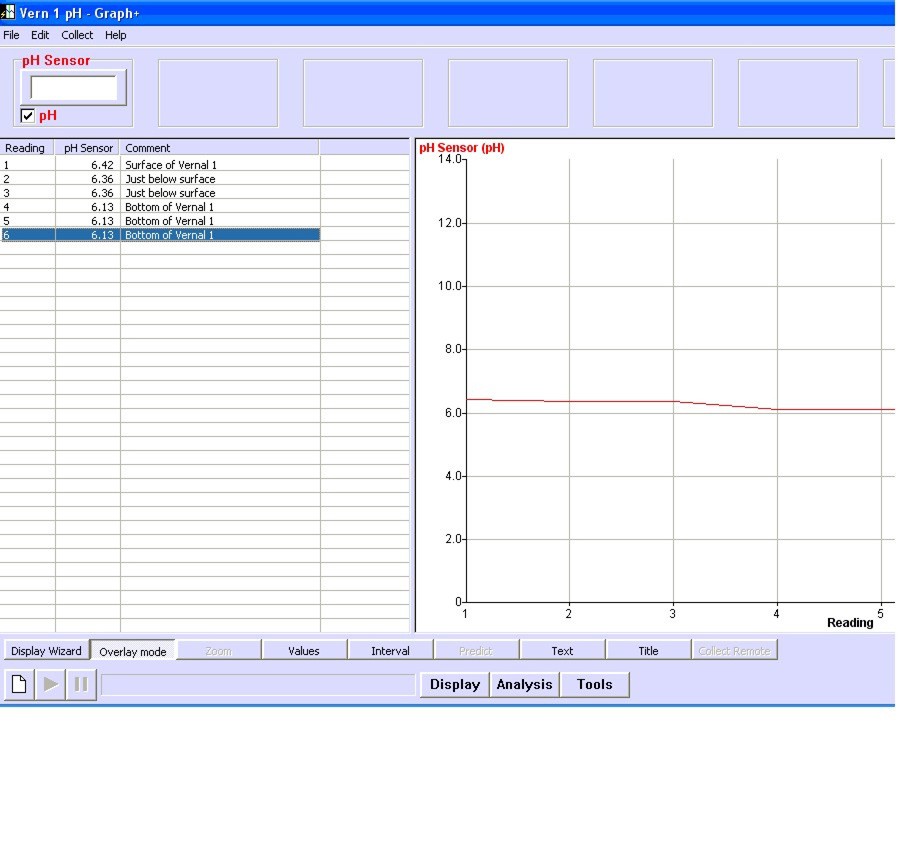
- Data collection
- graphing
- data analysis
Reflections and Feedback
Recent findings have shown that using technology for authentic learning in a cooperative setting provides at-risk students with a supportive, successful learning environment. When students are engaged in challenging, authentic learning, “teachers can draw on technology applications to simulate real-world environments and create actual environments for experimentation, so that students can carry out authentic tasks as real workers would, explore new terrains, meet people of different cultures, and use a variety of tools to gather information and solve problems” (Means et al., 1993 p. 43).
The above statement was written over 10 years ago, but in my student experiences, it still rings true. Students and teachers have even greater technological access today such as the use of handheld probe technology in this unit.
Upon introduction of the unit concept and technology, some very excited urban sixth grade student comments included -
"We get to use computers?!?!"
"I didn't know you could use computers in Science!"
Regarding handheld computers and probeware -
"I can't wait to try that!"
"This is so cool!"
Student Surveys
A pre-unit survey is available as a word document below. This can be used to gauge student's prior knowledge, abilities, and attitudes before beginning this unit.
This can be saved to your computer and modified as necessary.
Pre-unit Student SurveyStudent 1Student 2Student 4Student 5
Related Resource
Students and teachers should utilize the organism profiles found within the Related Content section of this unit. Video and related websites can enhance this learning experience and can be linked to within various sections of this page.
Website(s)
Fahrenheit to Celsius Converter