Learning Experience/Unit
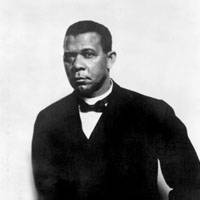
Opposing Perspectives on the "Race Problem"
Subject
English Language Arts (2005), Social Studies
Grade Levels
Commencement, 9th Grade, 10th Grade, 11th Grade, 12th Grade
Learning Context/ Introduction
Using a speech by Booker T. Washington and an excerpt of a text by W.E.B. DuBois, students debate the positions held by both men.
Activity One: Booker T. Washington
Atlanta, Georgia. September, 1895
- In American Memory, search African American Perspectives: Pamphlets from the Daniel A.P. Murray Collection, 1818 - 1907 for Booker T. Washington's speech at the International Exposition in Atlanta, Georgia.
- Read Washington's speech, and the two letters accompanying it.
- After reading the speech, formulate and write down the questions you might ask Washington about what he says in this speech.
- Write a summary of the position Booker T. Washington takes in his speech.
Activity Two: W.E.B. Dubois
The Souls of Black Folks, 1903.
- Read an excerpt from Of the Sons of Master and Man, Chapter IX of W.E.B. DuBois’ work The Souls of Black Folk, one of the African-American texts available in the Modern English Collection at the Electronic Text Center of the University of Virginia. Other segments of the work may be preferred by the teacher or the students.
The selected reading begins on page 127 of the electronic text:
"I have thus far sought to make clear the physical, economic, and political relations of the Negroes and whites in the South, as I have conceived them. . ."
It ends on page 130 with the phrase:
"that same line wavers and disappears. . ."
- After reading this selection, formulate and write down the questions you might ask DuBois about what he says in the text.
- Write a summary of DuBois' reflections on the "color-line" as expressed in the selected text.
Activity Three: The Great Debate
- Divide the class into three groups:
- Group One advocates Booker T. Washington's opinions on race relations.
- Group Two advocates W.E.B. DuBois' position on contact between the races.
- Group Three constitutes a panel questioning the beliefs of each man.
- The three groups spend a day in preparation for a "Great Debate." Groups One and Two review, research, and prepare to debate the respective positions of Washington and DuBois. Group Three reviews the questions generated by the class from their readings and selects questions for the debate.
- The debate follows a "presidential debate" format. Each member of the panel of questioners asks a question of one side. That side formulates a response. One of the members of the group delivers the response in imitating the speaking style of the man whose views the group represent. The group representing the opposing side is then given the opportunity to respond to the same question or to attempt to refute the other side's position. The order and procedure alternates between the two groups. Set time limits to responses.
- Read Dudley Randall’s poem "Booker T. and W. E. B." The poem is available in Danner, Margaret and Dudley Randall. Poem Counter Poem. Detroit, MI.: Broadside Press, 1969.
Duration
About 4 class periods
Author
Kathleen Prody and Nicolet Whearty
Source
This lesson was originally an extension activity in the learning experience "To Kill a Mockingbird: A Historical Perspective." Reproduced from the Library of Congress web site for teachers. Original lesson plan created as part of the Library of Congress American Memory Fellows Program.