Learning Experience/Unit
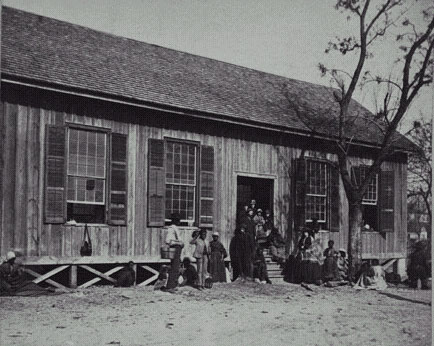
Ladies, Contraband, and Spies: Women in the Civil War
Subject
English Language Arts (2005), Social Studies
Grade Levels
Commencement, 10th Grade, 11th Grade
Assessment
- Approve the Text and Ephemera Analysis and Photo Analysis forms.
- Critique oral presentation based on Assessment Rubric.
- Evaluate the ability to synthesize information from oral presentations into a written essay. See Assessment Rubric for essay.
Learning Context/ Introduction
This lesson uses primary sources - diaries, letters, and photographs - to explore the experiences of women in the Civil War. By looking at a series of document galleries, the perspectives of slave women, plantation mistresses, female spies, and Union women emerge. Ultimately, students will understand the human consequences of this war for women.
Objectives
Students will:
develop skills in seeing and understanding visual and print sources;
learn to analyze and to draw inferences from sources;
develop understanding of how the Civil War affects the lives of women;
expand skills in online searching of the American Memory collections; and
expand skills in the use of PowerPoint.
Procedure
The procedure for this learning experience is composed of the following parts:
Part I: Activity One
Part II: Activity Two
Part III: Activity Three
Preparation
- Familiarize students with searching the American Memory collections. Use the Learning Page lesson, The Historians Sources.
- Provide students with basic instruction in PowerPoint.
- Print out pre-selected document sets from the American Memory collections reflecting various perspectives of women.
Contraband Document SetNorthern Women Document SetSpies and Soldiers Document SetSouthern Women Document Set
Activity One
- Spread out document sets in classroom. Instruct students to look at sets and form groups based on personal interest.
- Introduce lesson by distributing handouts about text and ephemera analysis and photo analysis.
- Give students copies of the Assessment Rubric illustrating assessment expectations and goals.
- Groups answer questions on handouts and fill out photo analysis forms about what they see and what they assume. Instructors coach groups as needed and sign off groups when analysis has sufficient depth.
- Students next go to the computer lab and locate their documents online in the American Memory collections. Alternatively, they may begin working on their presentation in the classroom.
- The student assignment page includes more detailed guidelines for the PowerPoint presentation.(For a printable version, click on "Student Assignment Handout" below.)
Student Assignment Handout
Activity Two
- Instruct students to prepare a five-to-six slide PowerPoint presentation on what they have deduced using the captured images. As an alternative, students may prepare a presentation using posterboard or video.
- Students present their completed project to classmates in a five-minute oral presentation with visual support.
- Following the presentations, lead a class discussion centered around the generalizations that one can make about women's experiences in the Civil War.
Activity Three
- Brainstorm what a textbook entry on women in the Civil War would include and how primary sources differ from textbook entries.
- Point out to the students that textbooks present only a small fraction of the knowledge available on a given subject, from a textbook author's point of view.
- Instruct students to write a 500 word textbook entry on women in the Civil War. Direct them to the Assessment Rubric.
- The student assignment page includes more detailed guidelines for the textbook entry.
- Writing the textbook entry forces students to try to synthesize the information they have analyzed and heard from other students and to condense it into a cohesive entry. They may feel the frustration that editors feel as they try to fit their knowledge into short, readable paragraphs.
Resources/Materials
Examples of Digital Primary Documents
Rationale - Why Use Primary Resources?
Other resources
Extension
Choose a subject for further research based on documents presented.
Duration
Five 45-minute classes
Author
Susan Allen and Mary Rockwell
Source
Reproduced from the Library of Congress web site for teachers. Original lesson plan created as part of the Library of Congress American Memory Fellows Program.