Assessment
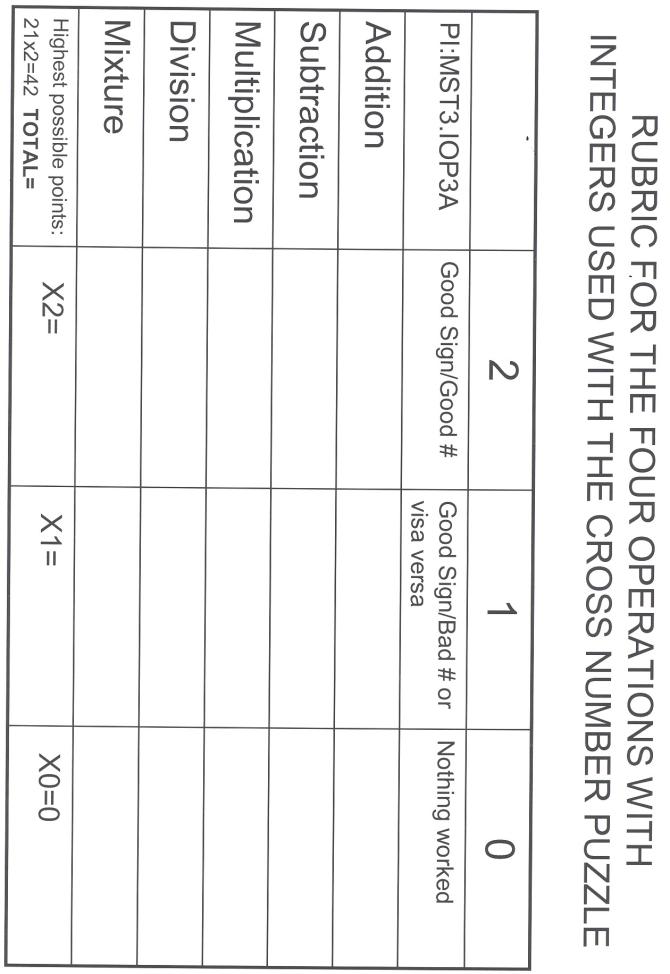
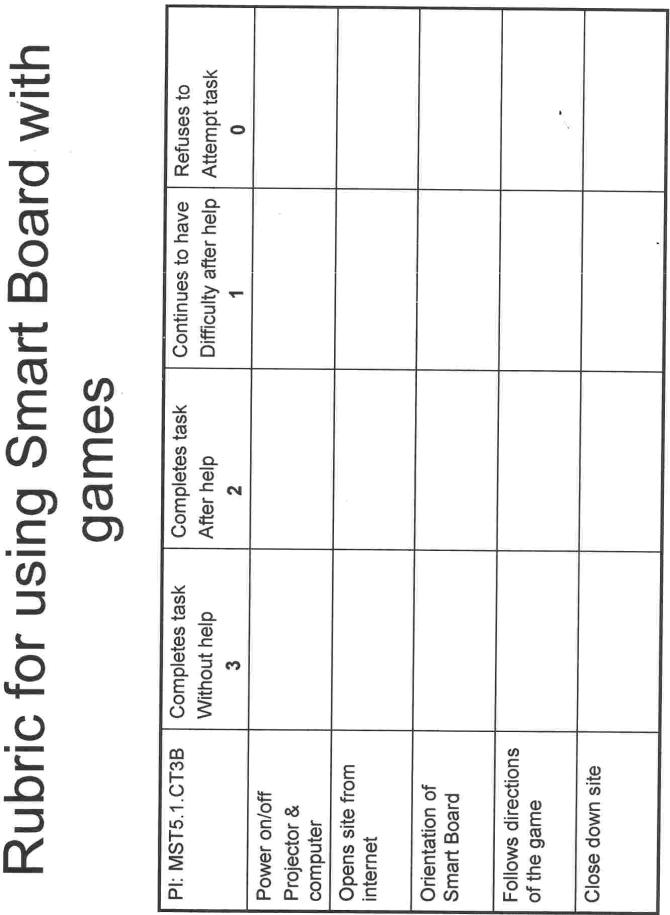
This learning experience will be assessed using a rubric that evaluates the students' knowledge of operations with signed numbers. Understanding of adding, subtracting, multiplying, and dividing signed numbers will be measured following completion of a "Cross-Number" puzzle. Using a rubric, students will score their own work by placing a tick mark under the appropriate column, depending on their responses, and then adding up their score. A second rubric will evaluate the students' participation and usage of the SMART Board while playing interactive math games. This rubric will be completed by the teacher as he/she observes the students during the activities.
Save
Save
Learning Context/ Introduction
This learning activity is intended for use with Grade 7. After completion of this learning experience, students will be able to add, subtract, multiply, and divide signed numbers. The main focus will be on student-centered activities that are engaging and motivational, and interactive types of "drill and practice" exercises that incorporate the use of the SMART Board and several internet sites. Certain "real life" situations where signed numbers are used are also included.
Duration
This learning activity should take approximately one 42-minute period for planning, which would include familiarity with the SMART Board and checking on the internet sites. The implementation of the learning experience takes three 42-minute class periods. The assessment takes approximately 20 minutes.
Essential Question
How would knowing the four basic operations of signed numbers effect your life?
What real-world situations require you to know how to add, subtract, multiply and divide signed numbers?
Instructional/Environment Modifications
One computer with access to the internet, which is also connected to a SMART Board is required. No calculators should be used for these activities except for students with IEPs. Students should be grouped with mixed ability so no one team is "stacked" with all high ability students.
Procedure
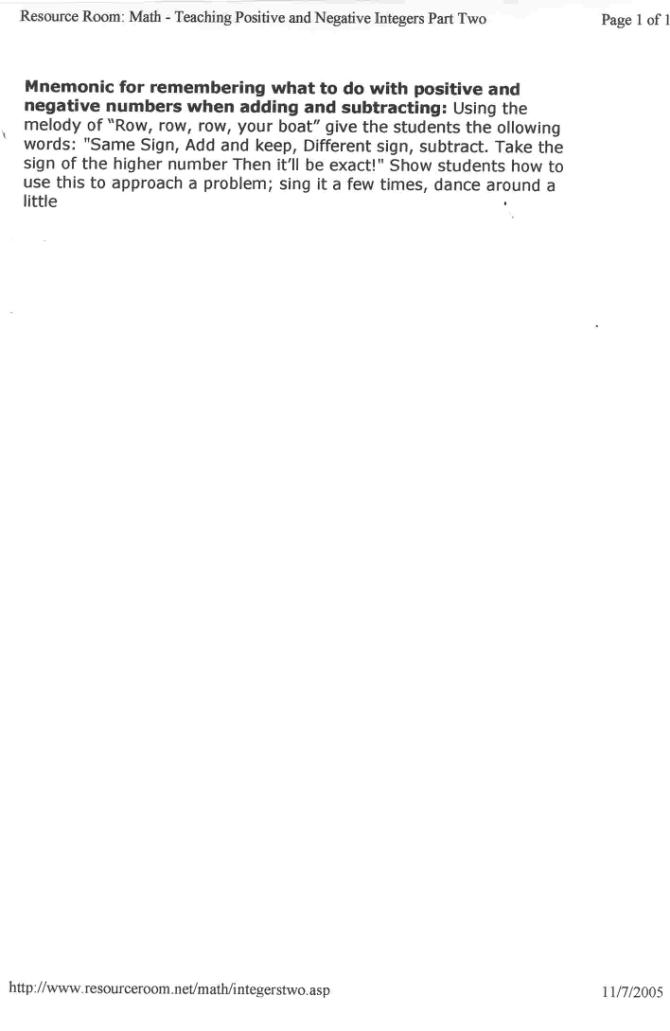
Assuming absolute value has already been introduced on the first day, students will be shown the addition of signed numbers process and the rule using a number line, (1). This will be reinforced using the SMART Board and the interactive game Number Line Bounce, and also a worksheet "How's Business?", (6). The students will recite a mnemonic for remembering the rule "Same sign, add and keep. Different sign, subtract. Take the sign of the higher number, then it'll be exact!" (to the tune of "Row, Row, Row, Your Boat".)
On day two, students will be shown the subtraction of signed numbers process and the rule using a number line (1). The negative sign will be emphasized as meaning the "opposite of." The concepts will be reinforced using the SMART Board and the Tic Tac Go interactive game.
On day three, students will be shown the multiplication and division of signed numbers process and rules using a number line for multiple moves or fractional moves. The concept of inverse operations, multiplicative inverse, will be used to reinforce the division rule, (1). All four operations will be reinforced using the SMART Board and a Jeopardy interactive game, where some questions/answers will relate operations of signed numbers in certain "real life" situations such as, golf, temperature change, stock market, above/below sea level, and banking.
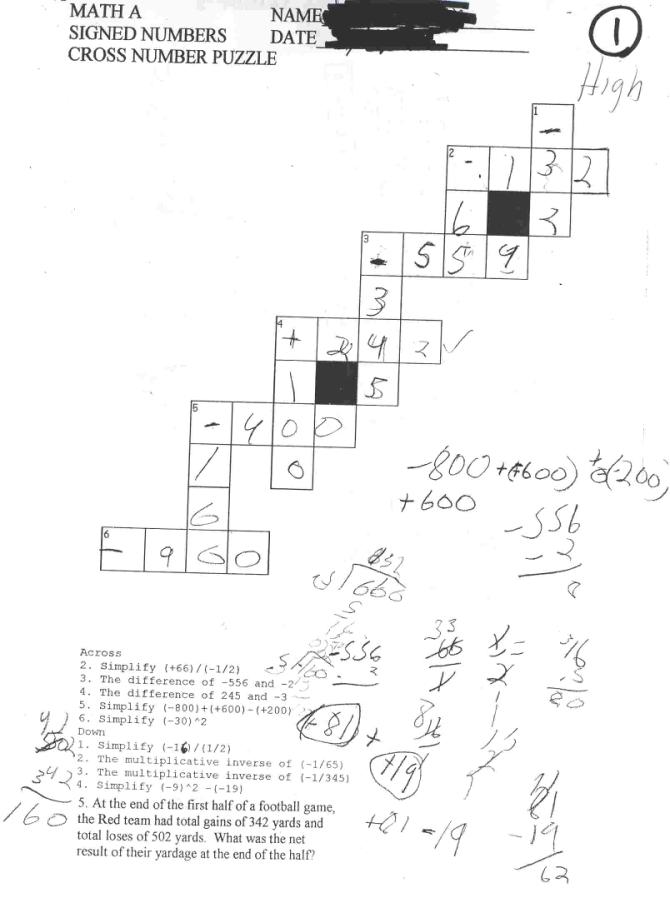
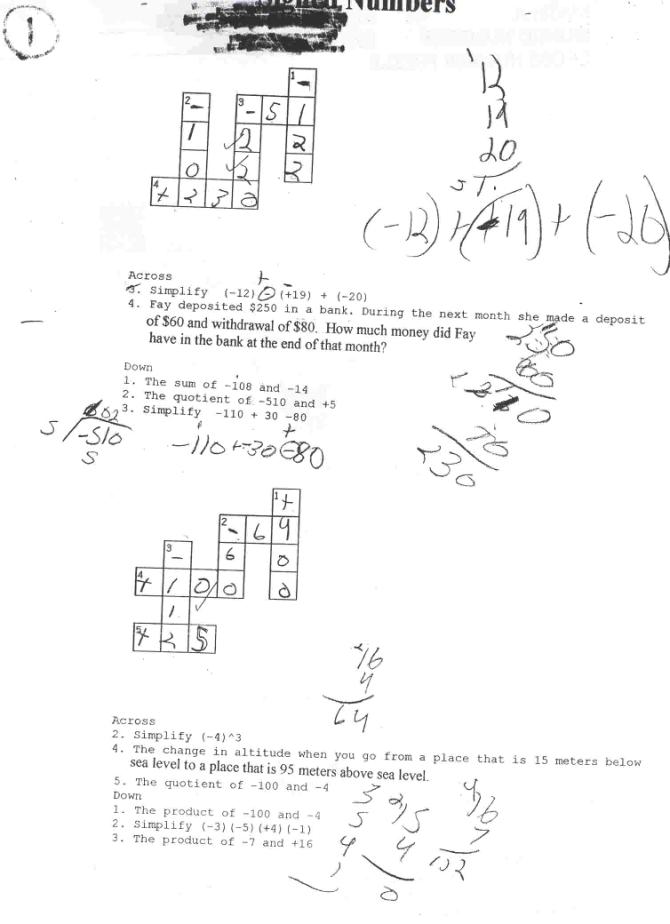
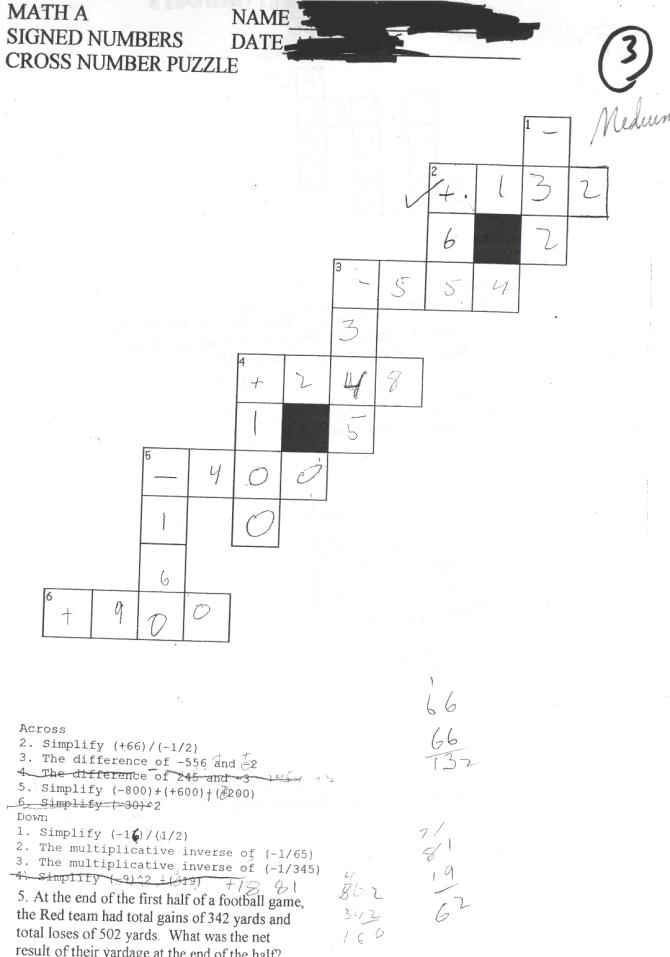
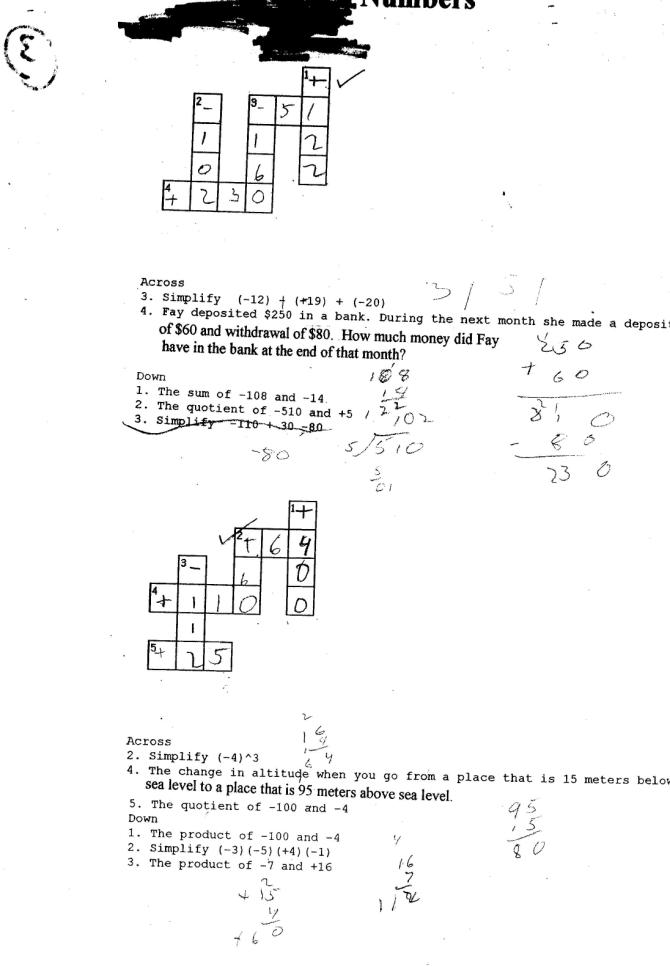
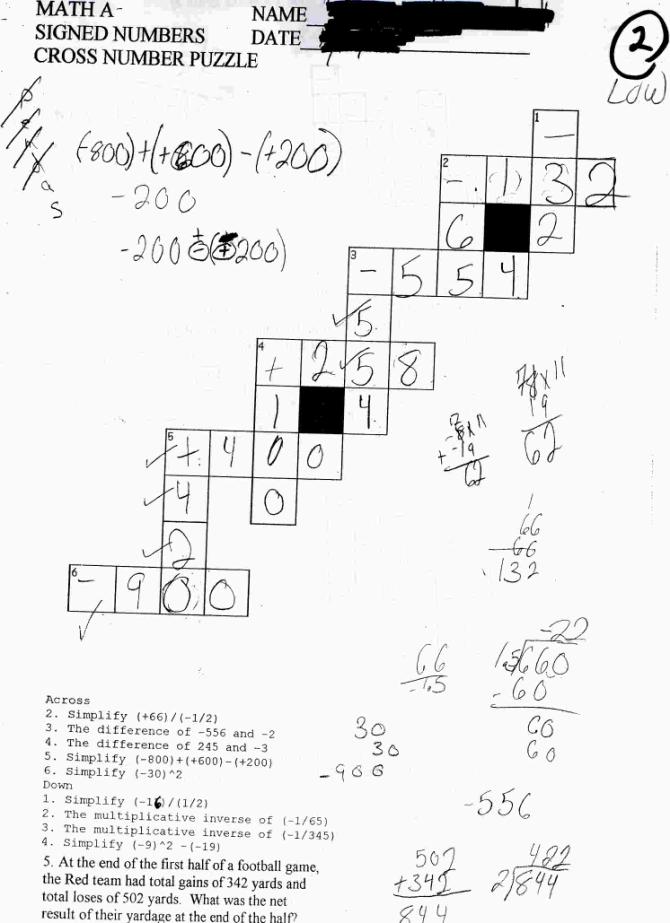
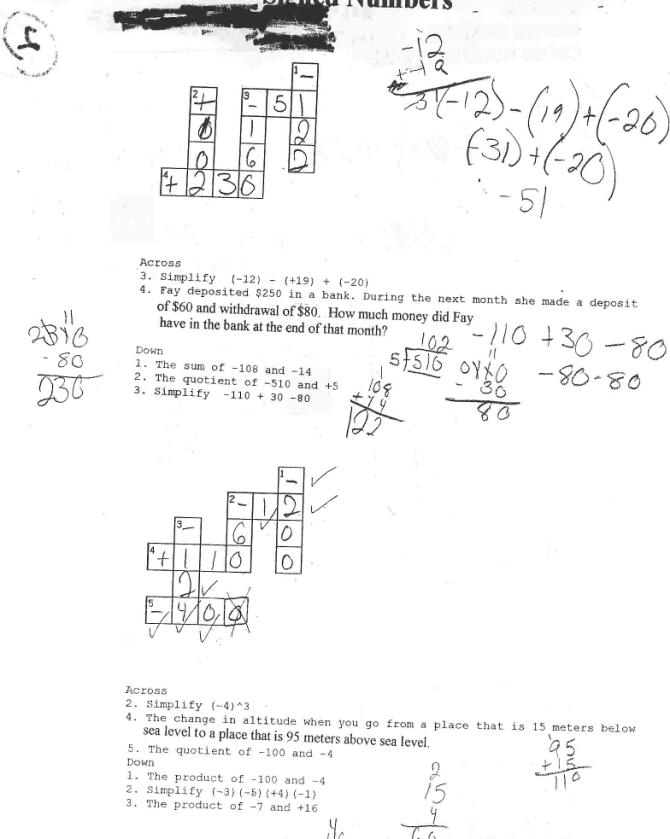
On day four, students will complete a "cross-number puzzle", (2), as a culminating diagnostic tool to check for understanding of signed number rules for addition, subtraction, multiplication, and division.
Save
Save
Reflections and Feedback
The students enjoy using the SMART Board, especially when it involves "fun" activities that incorporate competitive games. The games allow for participation of all the students, working together on a team, with very little teacher involvement. The drill and practice games replace the "boring" drill and practice paper and pencil method, and the students love it. Several times, I did not remember how to do a particular process with the SMART Board and the students spoke up and helped solve the problem. The students seem to have an excellent understanding of the technology. They pick up the process very quickly. It is great hearing laughter, encouragement, and applause coming from students in a math classroom, while solving math problems.
Student Work
Below are examples of student work.
Related Resource
(1). Amsco text, Mathematics A, (2002)
(2). Puzzlemaker
(3). Number Line Bounce
(4). Tic Tac Go
(5). Pre-Algebra with Pizzazz, 1977 Creative Pub., Inc.